Science News
 American
Science News for 28 August 2014
American
Science News for 28 August 2014
IBM's Watson Starts New Career Crunching Data for Science
Live Science - 28 Aug 2014 06:53 Watch out, Sherlock, there's a new Dr. Watson in town. IBM's Watson, the computer that famously won the quiz show 'Jeopardy!', is now helping researchers make scientific discoveries.
How HIV Co-Opts Gut Bacteria (Op-Ed)
Live Science - 28 Aug 2014 06:56 One of the most effective methods used by HIV to evade control is to hide from the immune system.
Scientists Successfully Turn Bad Memories Into Good, Good Into Bad
IBTimes - 28 Aug 2014 05:34
Ever wish you could erase any one of those bad memories you've compiled over the years? There's good news, if you're a mouse at least. Scientists have successfully reversed memories from unhappy to happy (insofar as rode...
Tourists Visiting Florida Hospital For Medical Treatment | Video
Live Science - 28 Aug 2014 23:53 UF Health Cancer Center's treatment for lymphedema has been described as "life-changing". Patients are flying down to the Orlando Hospital from all over the country for the procedure.
NASA SLS Rocket: Mars Test Launch By 2018 Consistent With Obama's 2010 Prediction [VIDEO]
IBTimes - 28 Aug 2014 23:34
NASA has announced that it will launch a rocket designed to carry humans to Mars in 2018, allowing amateur astronomers and science fiction buffs across the world to bask in the idea that humans could walk across the red ...
20 Corals Added to Endangered Species List
Live Science - 28 Aug 2014 23:11 A tenfold increase in protected coral species was announced Wednesday, with 20 new corals added to the threatened species list.
Exit strategy: Is it time to rethink the VA healthcare system?
Science Daily - 28 Aug 2014 23:00
As the federal government plans its exit strategy from the war, now may be the time for it to rethink its role in providing health care to veterans, says an expert. The VA incurs high fixed costs of a brick-and-mortar he...
Prions can trigger 'stuck' wine fermentations, researchers find
Science Daily - 28 Aug 2014 23:00
A biochemical communication system that crosses from bacteria to yeast, making use of prions, has been discovered. It is responsible for a chronic winemaking problem known as 'stuck fermentation' and may also have implic...
Socially-assistive robots help kids with autism learn by providing personalized prompts
Science Daily - 28 Aug 2014 23:00 Children with autism spectrum disorders showed improved or maintained performance in learning imitative behavior by interacting with humanoid robots that provided graded cueing, an occupational therapy technique that sha...
Climate change puts endangered Devils Hole pupfish at risk of extinction
Science Daily - 28 Aug 2014 23:00 Climate change is hurting reproduction of the endangered Devils Hole pupfish, threatening the survival of this rare species that has numbered as few as 35 individuals, new research by the University of Nevada, Reno and D...
Breakthrough in RSV research with drug trial
Science Daily - 28 Aug 2014 23:00
A new clinical trial of a drug was shown to safely reduce the viral load and clinical illness of healthy adult volunteers intranasally infected with respiratory syncytial virus (RSV). RSV is the most common cause of lowe...
Possible bacterial drivers of IBD identified
Science Daily - 28 Aug 2014 23:00 A handful of bacterial culprits have been identified that may drive inflammatory bowel diseases such as Crohn's disease and ulcerative colitis, using patients' own intestinal immune responses as a guide.
Are cigarette substitutes safe alternative? Depends on user habits
Science Daily - 28 Aug 2014 23:00
A recent literature review study suggests that small dosages of nicotine found in cigarette substitutes could be harmful to human musculoskeletal system, due to overuse. The researchers investigated and summarized the la...
Ebola Outbreak in Sierra Leone Began at a Funeral
Live Science - 28 Aug 2014 21:30 An extensive look at the genome of the Ebola virus reveals its behavior, when it arrived in West Africa and how it spread in the region to cause the largest-ever recorded Ebola outbreak.
3D-printed books make pictures real for blind children
New Scientist - 28 Aug 2014 21:30
Children's classics like The Very Hungry Caterpillar have come to life for visually impaired children thanks to 3D-printed Braille text and tactile pictures
A to zinc: What supplements are worth taking?
New Scientist - 28 Aug 2014 21:00
Vitamins, minerals, fish oils... the list of nutritional supplements you can buy keeps growing. Some are worth it, some aren't. We sift the evidence for you (full text available to subscribers)
Particle physics to aid nuclear cleanup
Symmetry Magazine - 28 Aug 2014 20:55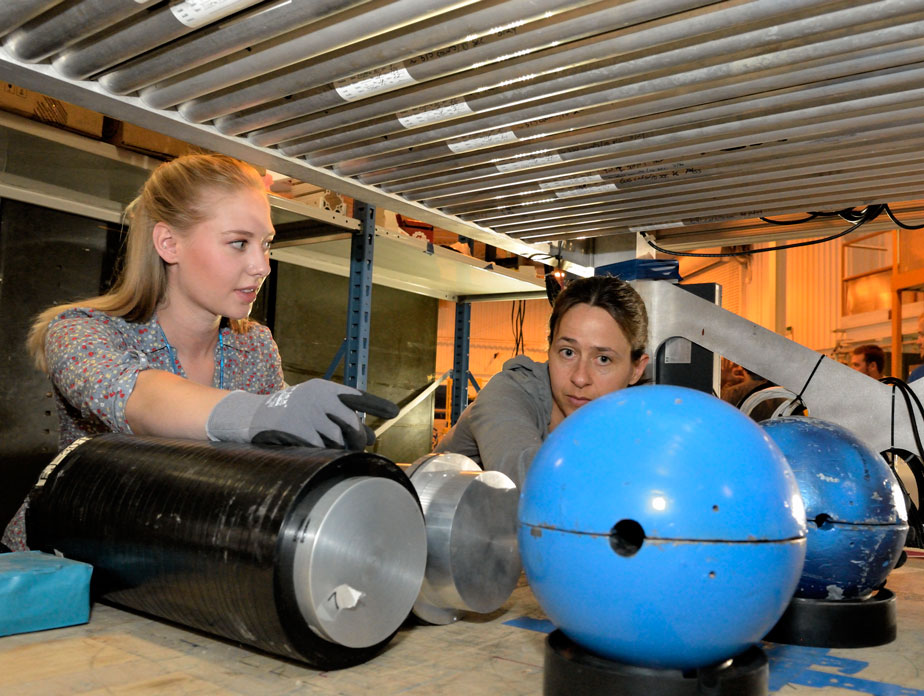 Cosmic rays can help scientists do something no one else can: safely image the interior of the nuclear reactors at the Fukushima Daiichi plant. A little after lunchtime on Friday, March 11, 2011, a magnitude 9.0 earthqua...
No Descendants Are Left from the First Eskimos
Live Science - 28 Aug 2014 20:46 A new study of human DNA -- and the largest genetics study yet of ancient peoples -- reveals that the Paleo-Eskimos are genetically distinct from both the Neo-Eskimos and modern Native Americans.
In Photos: Life in the Arctic region of the Americas
Live Science - 28 Aug 2014 20:45 Life the frigid Arctic is challenging, but humans have populated the region for thousands of years. Now, a new study suggests the first groups of people to live in the Arctic region of the Americas do not have any descen...
Second-hand e-cig smoke compared to regular cigarette smoke
Science Daily - 28 Aug 2014 20:28 Second-hand e-cig smoke has 10 times less particulate matter than regular cigarette smoke; but higher levels of certain toxic metals, a new study finds.
Home is where the microbes are
Science Daily - 28 Aug 2014 20:27 A person's home is their castle, and they populate it with their own subjects: millions and millions of bacteria. Scientists have detailed the microbes that live in houses and apartments. The results shed light on the co...
Electric current to brain boosts memory: May help treat memory disorders from stroke, Alzheimer's, brain injury
Science Daily - 28 Aug 2014 20:27 Stimulating a region in the brain via non-invasive delivery of electrical current using magnetic pulses, called Transcranial Magnetic Stimulation, improves memory. The discovery opens a new field of possibilities for tre...
 Global
 Great Britain
 Indian
 South Africa