Science News
 American
Science News for 15 January 2015
American
Science News for 15 January 2015
Deadly MERS Virus Spreads from Camels to People Only Rarely
Live Science - 15 Jan 2015 14:08 It's rare that the deadly virus that causes Middle East respiratory syndrome (MERS) spreads from camels to people, a new study says.
Your Blood Type May Put You at Risk for Heart Disease
Live Science - 15 Jan 2015 03:12 People whose blood type is A, B or AB have an increased risk of heart disease and shorter life spans than people who have type O blood, according to a new study.
DNA 'glue' could someday be used to build tissues, organs
e! Science News - 15 Jan 2015 01:51
DNA molecules provide the "source code" for life in humans, plants, animals and some microbes. But now researchers report an initial study showing that the strands can also act as a glue to hold together 3-D-printed mate...
Chemical dial controls attraction between water-repelling molecules
e! Science News - 15 Jan 2015 01:43
Fear of water may seem like an irrational hindrance to humans, but on a molecular level, it lends order to the world.
Keeping Climbers Alive with Physics
Physics Buzz - 15 Jan 2015 23:22
Tommy Caldwell (second from left) and Kevin Jorgeson (fourth from left) celebrating their climb of Dawn Wall yesterday afternoon. Credit: Peter Stevens via flickr Yesterday afternoon in Yosemite National Park, rock climb...
Women Can't Be Geniuses? Stereotypes May Explain Gender Gap
Live Science - 15 Jan 2015 23:12 Stereotypes hold that women can't be geniuses, and this might explain why women are underrepresented in certain academic fields, in which people believe natural talent is the most important factor for success.
Rice-sized laser, powered one electron at a time, bodes well for quantum computing
Phys.org - 15 Jan 2015 21:51 Princeton University researchers have built a rice grain-sized laser powered by single electrons tunneling through artificial atoms known as quantum dots. The tiny microwave laser, or "maser," is a demonstration of the f...
Roller-Coaster Flight: How Geese Save Energy While Migrating
Live Science - 15 Jan 2015 21:00 Every year, flocks of geese migrate hundreds of miles over the Himalayas, from their breeding grounds in Mongolia to Southeastern Tibet or India for the winter. Now, a new study reveals how these maverick aviators fly so...
Charge instability detected across all types of copper-based superconductors
Phys.org - 15 Jan 2015 21:00 Superconductors made of copper-oxide ceramics called cuprates are capable of conducting electricity without resistance at record-high temperatures--but still only at about one-third of room temperature. They also require...
Map that changed the world has its 200th birthday
New Scientist - 15 Jan 2015 21:00
The technique may be centuries old, but the same method used to make this map of rock types across the UK is still powerful, and has even been applied on Mars
Geese use the Himalayas like a massive rollercoaster
New Scientist - 15 Jan 2015 21:00
They're well adapted high-flyers, but instead of staying straight and level at lofty altitudes, migrating geese save energy by flying up peaks and down valleys
Eczema woes not just skin deep
Science Daily - 15 Jan 2015 20:48
Adults who have eczema -- a chronic itchy skin disease that often starts in childhood -- have higher rates of smoking, drinking alcoholic beverages and obesity and are less likely to exercise than adults who don't have t...
Flu Shot This Year Provides Weak Protection
Live Science - 15 Jan 2015 20:48 This year's flu vaccine is not very effective at preventing the flu, particularly among adults, according to new estimates from the Centers for Disease Control and Prevention.
If birds in a truck fly, does the truck get lighter?
New Scientist - 15 Jan 2015 20:32
Yes, but it also gets heavier, say researchers who weighed flapping birds with super sensitive scales
Sweet! Deep-Space Sugars May Reveal Clues About Origins of Life
Live Science - 15 Jan 2015 20:01 Sugars may form in the types of ice found in deep space -- a finding that could help to explain how comets and meteorites could have seeded the primordial Earth with key ingredients for life.
Today on New Scientist
New Scientist - 15 Jan 2015 19:30
All the latest on newscientist.com: inverting the process of evolution, galactic zombies, algorithm for the luck of love, pope hope, robot scribe and more
Sea Turtles Use Earth's Magnetic Field to Find Home
Live Science - 15 Jan 2015 19:01 Female sea turtles, known to swim thousands of miles before returning to their birthplace to lay eggs, find their way home by relying on unique magnetic signatures along the coast, a new study finds.
'Stranger Danger' Makes People Less Empathetic
Live Science - 15 Jan 2015 19:00 The stress of being around a stranger can dampen people's ability to feel their pain, new research shows.
3D Printed Electronic Devices Are Coming
Singularity Hub - 15 Jan 2015 18:00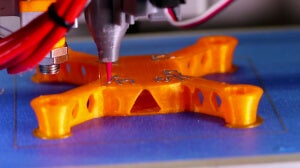 The handheld computers we carry in our pockets represent almost unimaginable complexity. Batteries, sensors, chips, circuits, and touch displays in a space age shell, all painstakingly assembled by thousands of workers a...
Stressed Out? Social Media May Help Women Cope
Live Science - 15 Jan 2015 17:06 Social media and other technologies might help lower stress, but not for everybody.
Going with the flow
Phys.org - 15 Jan 2015 17:04 Previous research has already demonstrated that substantial quantities of self-motile or active agents such as bacteria in a fluid environment can be harnessed to do mechanical work like moving microscopic gears and ratc...
Oceans and climate science: Higher water mark
The Economist - 15 Jan 2015 16:51 TIDES ebb and flow but mean sea levels are among the constants of climate science. Though things like the recent slowdown in the rise of average surface temperatures are puzzling, scientists can at least point to higher ...
 Global
 Great Britain
 Indian
 South Africa