Science News
 American
Science News for 20 January 2015
American
Science News for 20 January 2015
You think there's a multiverse? Get real
New Scientist - 20 Jan 2015 22:00
Positing that alternative universes exist is just disguising our lack of knowledge of the cosmos. It's time to move on, says physicist Lee Smolin (full text available to subscribers)
New Tech Could Reveal Secrets in 2,000-Year-Old Scrolls
Live Science - 20 Jan 2015 18:05 Using phase-contrast X-ray tomography could help researchers finally reveal the secrets hidden in the rolled scrolls of Herculaneum.
New signal amplification process set to transform communications, imaging, computing
Phys.org - 20 Jan 2015 18:00 Signal amplification is ubiquitous to all electronic and optoelectronic systems for communications, imaging and computing - its characteristics directly impact device performance.
People Really Do Use Restaurant Calorie Labels
Live Science - 20 Jan 2015 23:59 Women and people with high incomes are particularly likely to use calorie information at restaurants.
Coffee May Protect Against Some Skin Cancers
Live Science - 20 Jan 2015 23:30 Enjoy your morning cup of joe without guilt: A new study finds that drinking four or more cups of coffee daily is linked with a lower risk of malignant melanoma, the deadliest skin cancer.
One nanoparticle, 6 types of medical imaging
e! Science News - 20 Jan 2015 22:33
It's technology so advanced that the machine capable of using it doesn't yet exist.
Your Smartphone Can Do Physics
Physics Buzz - 20 Jan 2015 22:26
That smartphone you carry around in your pocket all day is a pretty versatile lab assistant. It is packed with internal sensors that measure everything from acceleration to sound volume to magnetic field strength. But I'...
How to build your own particle detector
Symmetry Magazine - 20 Jan 2015 21:44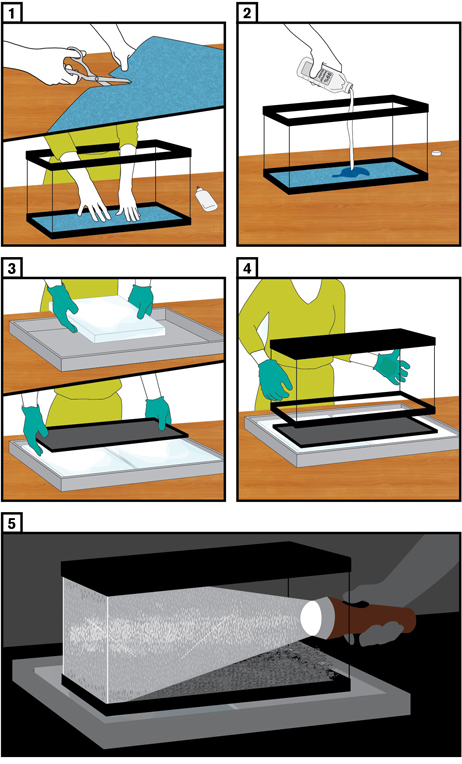 Make a cloud chamber and watch fundamental particles zip through your living room! The scale of the detectors at the Large Hadron Collider is almost incomprehensible: They weigh thousands of tons, contain millions of det...
Doctors Need More Evidence About Opioids, Report Says
Live Science - 20 Jan 2015 21:39 Exactly how opioid drugs should best be used to treat patients who are in pain remains unclear. In fact, the scientific evidence on the topic is so scarce that doctors have little choice but to rely on their own clinical...
Elon Musk Reveals Test Site for Futuristic 'Hyperloop' System
Live Science - 20 Jan 2015 20:23 The Lone Star state could soon be the new testing ground for the most futuristic transportation system in the world.
New signal amplification process set to transform communications, imaging, computing
e! Science News - 20 Jan 2015 20:05
Signal amplification is ubiquitous to all electronic and optoelectronic systems for communications, imaging and computing -- its characteristics directly impact device performance.
Today on New Scientist
New Scientist - 20 Jan 2015 19:30
All the lastest on newscientist.com: why your brain loves pointless rituals, bitcoin vs big data, wash like an Egyptian, Davos, Glass, snail drugs and more
Laser-generated surface structures create extremely water-repellent metals
e! Science News - 20 Jan 2015 19:05
Scientists at the University of Rochester have used lasers to transform metals into extremely water repellent, or super-hydrophobic, materials without the need for temporary coatings.
Citizen scientists sift soil for new antibiotics
New Scientist - 20 Jan 2015 18:32
Volunteers around the world are helping researchers hunt for earth-dwelling bacteria that could yield a much-need antibiotic breakthrough
Ancient Scrolls Buried By Mt. Vesuvius 'Unrolled' Using X-Rays | Video
Live Science - 20 Jan 2015 18:01 Hundreds of charred, rolled papyrus scrolls that were buried after the eruption of Mt. Vesuvius in A.D. 79 could be virtually unrolled thanks to a new x-ray method of reading them.
New Farm Maps Offer In-Depth Picture of Global Agriculture
Live Science - 20 Jan 2015 18:01 Two new maps available for free download considerably improve estimates of land dedicated to agriculture, and provide the first global overview of field sizes.
What Will Google Glass 2.0 Need to Succeed?
Singularity Hub - 20 Jan 2015 18:00 Yesterday marked the end of Google's Glass Explorer Program. First released with much fanfare in 2013, Google marketed Glass to developers and early adopters. For $1,500, they would get the device...
Laser-generated surface structures create extremely water-repellent metals
Phys.org - 20 Jan 2015 18:00 Scientists at the University of Rochester have used lasers to transform metals into extremely water repellent, or super-hydrophobic, materials without the need for temporary coatings.
Eureka relived: Wash like an Egyptian
New Scientist - 20 Jan 2015 18:00
Ancient cosmetic recipes often claimed the endorsement of celebrities such as Cleopatra. But could they really have made her complexion so famously milky? (full text available to subscribers)
Defining adhesion clusters
e! Science News - 20 Jan 2015 17:03
Scientists at the Mechanobiology Institute (MBI) at the National University of Singapore (NUS) have discovered the molecular mechanisms responsible for the formation of the adherens junction at the nanoscale level. This ...
New laser could upgrade the images in tomorrow's technology
e! Science News - 20 Jan 2015 16:33
A new semiconductor laser developed at Yale has the potential to significantly improve the imaging quality of the next generation of high-tech microscopes, laser projectors, photolithography, holography, and biomedical i...
Atoms can be in two places at the same time
Phys.org - 20 Jan 2015 16:25 Can a penalty kick simultaneously score a goal and miss? For very small objects, at least, this is possible: according to the predictions of quantum mechanics, microscopic objects can take different paths at the same tim...
 Global
 Great Britain
 Indian
 South Africa