Science News
 American
Science News for 20 April 2015
American
Science News for 20 April 2015
The Mysteries of the World's Tiniest Bits of Matter
Scientific American - 20 Apr 2015 16:00 Physicists have known for decades that particles called gluons keep protons and neutrons intact—and thereby hold the universe together. Yet the details of how gluons function remain... --
VTT accelerates commercialization of foam forming technology
EurekAlert! - 20 Apr 2015 06:00
(VTT Technical Research Centre of Finland) Foam forming technology offers companies major cost saving possibilities in paper and paperboard manufacturing. It also expands the use of natural fibers in the production of re...
170-Year-Old Champagne Recovered from the Bottom of the Sea
Live Science - 20 Apr 2015 22:11 Every wine connoisseur knows the value of an aged wine, but few get the opportunity to sample 170-year-old champagne from the bottom of the sea.
Building an Earth-Size Telescope, 1 Station at a Time
Scientific American - 20 Apr 2015 21:44 Imagine a trio of aerobatic aircraft. Over the years they've gotten very good at their routine. But they want to add another five or six or seven members. --
How Does Wireless Charging Work?
Live Science - 20 Apr 2015 21:07 While a system to wirelessly charge objects has been around for more than a century, it's only now becoming popular because of improvements in technology.
The Science Of Beer Brewing
Physics Buzz - 20 Apr 2015 21:05
Originally published: Apr 16 2015 - 8:45am, Inside Science TVBy: Karin Heineman, Executive Producer(Inside Science TV) - Beer! Most Americans choose it over all other alcoholic beverages.It's also one of the world's olde...
Morality is rooted in the way societies get their energy
New Scientist - 20 Apr 2015 21:00
Why do different groups of people have vastly different views of right and wrong? Archaeologist Ian Morris thinks he's found what's really fuelling our values (full text available to subscribers)
19th-century champagne haul shows seabed is perfect wine cooler
New Scientist - 20 Apr 2015 21:00
Chemical analysis of champagne from a shipwreck reveals the wine "kept its intrinsic characteristics", despite 200 years at the bottom of the Baltic Sea
18th-century champagne haul shows seabed is perfect wine cooler
New Scientist - 20 Apr 2015 21:00
Chemical analysis of champagne from a shipwreck reveals the wine "kept its intrinsic characteristics", despite 200 years at the bottom of the Baltic Sea
True to Their Name, Vampire Squid May Have Long Lives
Live Science - 20 Apr 2015 20:29 While most female squid and octopuses have just one reproductive cycle before they die, vampire squid go through dozens of egg-making cycles in their lifetimes, a study found.
Hair analysis on trial after FBI admits to using flawed evidence
New Scientist - 20 Apr 2015 20:00
he FBI has admitted that flawed evidence was accepted in nearly all of the trials that took place over the 1980s and 90s. Is hair analysis still any use at all?
Duplicating Humans With Robots Is Very Hard | Video
Live Science - 20 Apr 2015 19:46 Alex Leonessa, NSF program director for General & Age-Related Disabilities Engineering, describes key challenges in creating truly useful robotic systems to supplementing humans. DARwin-OP, the soccer-playing robot, illu...
Miniature sea snails found in acidic sea near volcanic seeps
New Scientist - 20 Apr 2015 19:15
The snails have shrunk to adapt to acidic seas, an effect expected in marine species with shells as oceans keep acidifying
Vampire feeds on decaying matter and spawns eggs in batches
New Scientist - 20 Apr 2015 19:04
Unlike other squid or octopuses, the deep-sea vampire squid ekes out its reproductive efforts across its slow, long life
Looking Ahead as Moore's Law Turns 50: What's Next for Computing?
Singularity Hub - 20 Apr 2015 18:27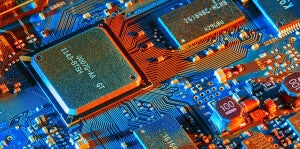 On April 19, 1965, Intel cofounder Gordon Moore (then of Fairchild Semiconductor) published a paper on the fledgling technology of integrated circuits. In the paper, Moore noted that the number of...
Mini 3D printed organs mimic beating heart and liver
New Scientist - 20 Apr 2015 18:25
Watch a collection of tiny beating hearts and a heart fused to a liver, made using techniques that could one day help build a human on a chip
Virus hiding in our genome protects early human embryos
New Scientist - 20 Apr 2015 18:13
A viral stowaway in our DNA rebuffs other viruses and activates genes when embryos are days old, supporting the idea that viruses are our silent controllers
Carbon dioxide could be turned into a huge underground battery
New Scientist - 20 Apr 2015 17:23
Storing excess energy with carbon dioxide compressed underground could help even out our energy flow and clean up the atmosphere
Driven from distraction
The Economist - 20 Apr 2015 17:00 HUMAN beings are a distractible bunch, and their propensity to be elsewhere, mentally speaking, is particularly dangerous when they are motoring. Attempts to deal with this go back a long way. In 1953, for example, the G...
Interactions.org Newsdigest 20 April 2015
Interactions - 20 Apr 2015 17:00
In defense of scientism and the joys of self-publishing -- Life underground: Anything anyone would teach me -- Building a neutrino detector -- Mapping the cosmos: Dark Energy Survey creates detailed guide to spotting dar...
Quantum model helps solve mysteries of water
Phys.org - 20 Apr 2015 15:53 Water is one of the most common and extensively studied substances on earth. It is vital for all known forms of life but its unique behaviour has yet to be explained in terms of the properties of individual molecules.
Polar V800: GPS Watch Review
Live Science - 20 Apr 2015 15:33 The Polar V800 is a GPS watch that tracks a wide variety of sports -- from running and swimming to yoga, dance and CrossFit.
 Global
 Great Britain
 Indian
 South Africa