Science News
 American
Science News for 30 April 2015
American
Science News for 30 April 2015
No Hogwarts invitation required: Invisibility cloaks move into the real-life classroom
e! Science News - 30 Apr 2015 18:05
Who among us hasn't wanted to don a shimmering piece of fabric and instantly disappear from sight? Unfortunately, we non-magical folk are bound by the laws of physics, which have a way of preventing such fantastical esca...
Two teams estimate the flavor of neutrinos detected by The IceCube Neutrino Observatory
Phys.org - 30 Apr 2015 17:00 (Phys.org)--Two teams of researchers have now offered their findings regarding the estimates of the flavor of neutrinos that were detected by the The IceCube Neutrino Observatory (TINO) two years ago. The first group, a ...
Big Data reveals classical music creation secrets
Phys.org - 30 Apr 2015 16:31 A team of scientists has shed light on the dynamics of the creation, collaboration and dissemination processes involved in classical music works and styles. Their study focuses on analysing networks of composers contempo...
Engineering a better solar cell: UW research pinpoints defects in popular perovskites
e! Science News - 30 Apr 2015 22:34
One of the fastest-growing areas of solar energy research is with materials called perovskites. These promising light harvesters could revolutionize the solar and electronics industries because they show potential to con...
Big Aftershocks May Occur at Edge of Large Quakes
Live Science - 30 Apr 2015 22:32 A new study finds that the biggest aftershocks tend to strike at the edge of the original earthquake.
Why the Apple Watch Is Confused by Tattoos
Live Science - 30 Apr 2015 21:53 Some Apple Watch users who have tattoos are running into problems when using the device's heart-rate monitor and other features, as it appears the ink in tattoos can interfere with the watch's sensors.
How some beetles produce a scalding defensive spray
e! Science News - 30 Apr 2015 21:41
Bombardier beetles, which exist on every continent except Antarctica, have a pretty easy life. Virtually no other animals prey on them, because of one particularly effective defense mechanism: When disturbed or attacked,...
NASA's Messenger probe crashes into Mercury
New Scientist - 30 Apr 2015 21:26
After exhausting its fuel spending four years orbiting the nearest planet to the sun, Messenger has crashed, creating a 16-metre crater
NASA's Messenger probe crashes into Mercury making giant crater
New Scientist - 30 Apr 2015 21:26
After exhausting its fuel spending four years orbiting the nearest planet to the sun, Messenger has crashed, creating a 16-kilometre crater
Out-of-Body Experience Is Traced in the Brain
Live Science - 30 Apr 2015 21:00 What happens in the brain when a person has an out-of-body experience? A team of scientists may now have an answer.
Birds do impressions - it's time to take them seriously
New Scientist - 30 Apr 2015 21:00
Chainsaws. Dogs. Even you. Birds are known for being great mimics. But the reasons why have been a mystery. Until now. (full text available to subscribers)
Parkinson's Pen Vibrates to Improve Legibility
Scientific American - 30 Apr 2015 21:00Colorado Plague Outbreak Shows It's Hard to Diagnose the Disease
Live Science - 30 Apr 2015 20:59 Doctors and veterinarians in the southwestern United States should keep an eye out for cases of plague, according to a new report from the Centers for Disease Control and Prevention.
Physicists discover quantum-mechanical monopoles
Phys.org - 30 Apr 2015 20:00 Researchers at Aalto University (Finland) and Amherst College have observed a point-like monopole in a quantum field itself for the first time. This discovery connects to important characteristics of the elusive monopole...
Nepal earthquake: Can we make nations more disaster resilient?
New Scientist - 30 Apr 2015 20:00
After the destruction in Nepal, it's natural to wonder how to improve earthquake preparedness. People are the key, says Alex Densmore
Smallpox-Like Virus Infects Lab Worker After Mishap
Live Science - 30 Apr 2015 19:59 A lab worker in Boston became infected with a virus similar to smallpox after he accidentally stuck himself with a needle that was contaminated with the virus, according to a new report of the case.
UV radiations: NONO helps to mend the damage
Science Daily - 30 Apr 2015 19:48
A new molecular mechanism whereby human cells protect their genome from the detrimental effect of UV radiations has been discovered by researchers. NONO is a multifunctional protein involved in melanoma development and p...
Bat Wings Harbor Special Sensory Cells
Live Science - 30 Apr 2015 19:48 Bat wings have built-in systems to rapidly detect airflow changes, enabling these flying mammals to perform aerial acrobatics.
Compact synchrotron makes tumors visible
e! Science News - 30 Apr 2015 19:09
Soft tissue disorders like tumors are very difficult to recognize using normal X-ray machines. There is hardly any distinction between healthy tissue and tumors. Researchers at the Technische Universität München (TUM) ...
The human universe: Was the cosmos made for us?
New Scientist - 30 Apr 2015 19:00
For millennia, we humans have thought of ourselves as a pretty big deal. Then along came science and taught us how insignificant we are. Or so we thought (full text available to subscribers)
Stanford Virtual Reality Lab Ditches $40K Rig for $350 Oculus Rift
Singularity Hub - 30 Apr 2015 18:55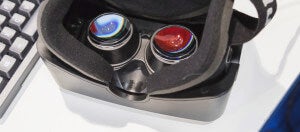 Ever since the Oculus Rift first started blowing minds a few years ago, virtual reality hasn't just been a hot topic, it's inspired a $2 billion Facebook acquisition and a...
Teleporting trick shows how the brain helps us know our own body
New Scientist - 30 Apr 2015 18:51
Conflicting sensory information that makes people feel they are teleporting has revealed the brain regions that keep track of our body in space
 Global
 Great Britain
 Indian
 South Africa