Science News
 American
Science News for 7 May 2015
American
Science News for 7 May 2015
US-CERN agreement paves way for new era of scientific discovery
Phys.org - 7 May 2015 20:16 A new agreement between the United States and the European Organization for Nuclear Research (CERN) signed today will pave the way for renewed collaboration in particle physics, promising to yield new insights into funda...
Amazing Images of Proteins May Help Scientists Design Drugs
Live Science - 7 May 2015 21:13 Researchers can now spy on proteins at nearly the level of their individual atoms, thanks to a new microscope technique.
Mercury's magnetic heart was beating soon after its birth
New Scientist - 7 May 2015 20:00
The planet's molten core became magnetic nearly 4 billion years ago - potentially making Mercury's magnetic field the most enduring in our solar system
Dutch researchers feared dead after disappearing in the Arctic
New Scientist - 7 May 2015 12:00
Two experienced Dutch researchers went missing while researching thinning ice in the Canadian Arctic. A rescue team found their dog by a hole in the ice
Doctor Who Survived Ebola Nearly Lost His Vision
Live Science - 7 May 2015 22:36 An American doctor who recovered from Ebola developed serious eye problems months later, as a result of the virus lingering in the eye, according to a new report of the case.
Alzheimer protein's structure may explain its toxicity
Science Daily - 7 May 2015 21:58 The molecular structure of one of the proteins in the fine fibers of the brain plaques that are a hallmark of Alzheimer's disease, researchers have found. This molecule, called amyloid beta-42, is toxic to nerve cells an...
500-Million-Year-Old Brains of 'Sea Monsters' Get Close Look
Live Science - 7 May 2015 21:15 The shiny, fossilized brains of two ancient sea-monsterlike creatures are helping researchers understand how the ancestors of modern-day arthropods, such as scorpions and lobsters, evolved, as shown in a new study.
Seeing Enzyme And Drug Molecules Paves Way For Cures | Video
Live Science - 7 May 2015 21:12 Using cryo-electron microscopy (cryo-EM), scientists have captured the most detailed image yet of protein structures. This might "revolutionize drug development," according to The National Cancer Institute.
Measles Vaccine May Protect Against Other Diseases
Live Science - 7 May 2015 21:06 Getting vaccinated against measles may also help you avoid other diseases as well, a new study shows.
Strong statin-diabetes link seen in large study
Science Daily - 7 May 2015 20:53 In a study of nearly 26,000 beneficiaries of Tricare, the military health system, those taking statin drugs to control their cholesterol were 87 percent more likely to develop diabetes. The research confirms past finding...
Does Facebook Shelter People from Different Opinions?
Live Science - 7 May 2015 20:04 Many people today get their news via Facebook, but most probably give little thought to how the social media network filters the stories they see.
Near-atomic resolution of protein structure by electron microscopy holds promise
Phys.org - 7 May 2015 20:02 A new study shows that it is possible to use an imaging technique called cryo-electron microscopy (cryo-EM) to view, in near-atomic detail, the architecture of a metabolic enzyme bound to a drug that blocks its activity....
Measles leaves you vulnerable to a host of deadly diseases
New Scientist - 7 May 2015 20:00
Here's another reason to vaccinate kids. Measles wipes our immune system memory, leaving us at risk of diseases such as meningitis and pneumonia
Polluted Star Hints at Water's Origins on Earth and Alien Planets
Live Science - 7 May 2015 19:33 Astronomers have spotted a dead star polluted with heavy elements, suggesting that the star recently chowed down on a water-laced asteroid.
Satellite Photos Aiding Nepal Earthquake Recovery Efforts
Live Science - 7 May 2015 19:25 Scientists at space agencies across the world are using satellite images and other technologies to aid those affected by Nepal's earthquake.
Uganda's forests dwindle as illegal settlers hollow them out
New Scientist - 7 May 2015 19:02
Despite a government promise to reverse deforestation, settlers are continuing to destroy forest reserves and the wildlife that once thrived there
Daimler's Driverless 18-Wheelers Approved to Cruise Nevada's Highways
Singularity Hub - 7 May 2015 18:55 This summer, while road tripping through Nevada, you may pull up to the sleek silver cab of an 18-wheeler, and get a shock--the driver isn't looking at the road, and...
New mechanism of blood pressure regulation by a stress-sensitive gatekeeper
Science Daily - 7 May 2015 18:28
A new mechanism for the regulation of blood pressure has been discovered by scientists. The study shows that blood pressure can drop dramatically if the protein ERAP1 is released from cells and enters the blood stream.
Can Too Much Vitamin D Be Toxic?
Live Science - 7 May 2015 17:47 More Americans are taking vitamin D supplements, but could people get sick from it?
The Accidental Birth of Radio Astronomy
Physics Buzz - 7 May 2015 17:27
Sometimes the biggest scientific discoveries arise from technicians simply trying to do their job. This was certainly the case for one of the key astronomical discoveries of the past century: the 1933 detection of radio ...
Cool thinking
The Economist - 7 May 2015 17:07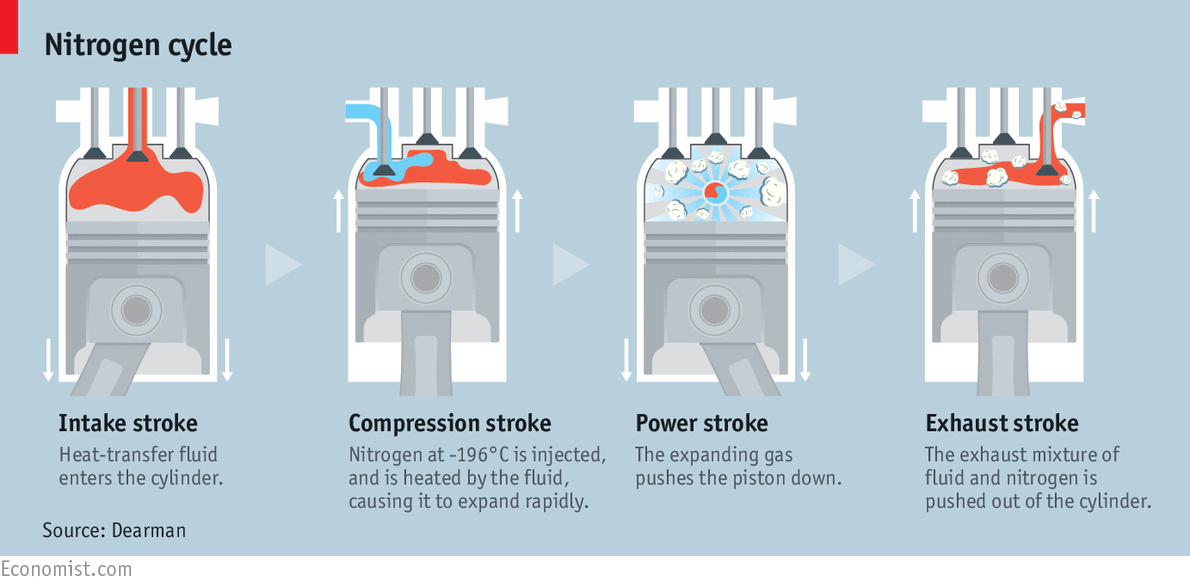 LIQUID nitrogen seems a good place to start if you want to cool something down. If Peter Dearman, a British inventor, is correct, it might be even better than it looks. Mr Dearman is a man with a bee in his bonnet. He ha...
A glittering prize
The Economist - 7 May 2015 17:07
GETTING a telescope into orbit is challenging and costly. Astronomers want instruments with the biggest mirrors possible. Big mirrors gather more light, so can see fainter objects. They also have higher magnification, so...
 Global
 Great Britain
 Indian
 South Africa