Science News
 American
Science News for 6 January 2016
American
Science News for 6 January 2016
Hydrogen Bomb vs. Atomic Bomb: What's the Difference?
Live Science - 6 Jan 2016 22:26 North Korea claims to have tested a hydrogen bomb, a weapon more powerful than the atomic bombs that devastated the Japanese cities of Nagasaki and Hiroshima during World War II. Here's how they differ.
Insulin-producing pancreatic cells created from human skin cells
Science Daily - 6 Jan 2016 16:17 Scientists have successfully converted human skin cells into fully-functional pancreatic cells. The new cells produced insulin in response to changes in glucose levels, and, when transplanted into mice, the cells protect...
How Computers Help Biologists Crack Life's Secrets
Live Science - 6 Jan 2016 23:30 Once the three-billion-letter-long human genome was sequenced, we rushed into a new "omics" era of biological research.
3,400-Year-Old Citadel Excavated In Israel | Aerial Video
Live Science - 6 Jan 2016 22:12 The remains of the fortress were uncovered on a site that will house an apartment high-rise. The builder will integrate the ancient site into the basement of the new structure for residents and visitors.
'Kidnapped' Sharks Use Their Noses to Navigate Back to Shore
Live Science - 6 Jan 2016 22:01 Sharks may use their keen sense of smell to navigate the vast ocean, a new study finds.
Photos: Sharks with Nose Plugs Have Trouble Getting Home
Live Science - 6 Jan 2016 21:59 Leopard sharks may use smell to help them navigate the ocean, a new study finds.
Cluster analysis
The Economist - 6 Jan 2016 21:54 Ripe for colonisation ONE of astronomy's biggest changes of perspective in recent years has been the realisation that planets are abundant in the cosmos. But not everywhere. Collections of stars called globular clusters ...
Invisible Light Flashes Ignite "Nano-Fireworks"
Physics Buzz - 6 Jan 2016 21:31
As people around the world prepared for the excitement of New Years Eve and the fireworks that often accompany the stroke of midnight, fireworks of a different kind were taking place at a laboratory in Berlin.Nanoparticl...
Bacteria attack lignin with enzymatic tag team
Science Daily - 6 Jan 2016 21:30 New research shows how bacterial enzymes team up to attack lignin. The findings could lead to more efficient processes for creating biofuels from wood, grass and agricultural waste, say scientists.
High-fidelity CRISPR-Cas9 nucleases have no detectable off-target mutations
Science Daily - 6 Jan 2016 21:30 A new engineered version of the gene-editing CRISPR-Cas9 nuclease appears to robustly abolish the unwanted, off-target DNA breaks that are a significant current limitation of the technology, reducing them to undetectable...
Check Out This Gravity-Defying Robot That Zips Up Vertical Walls
Singularity Hub - 6 Jan 2016 20:37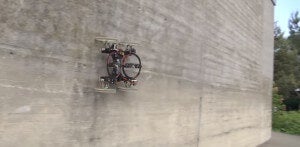 When robots were still largely the domain of science fiction, their most common shape was human (more or less)--two legs, two arms, one head. Now that we've actually begun building...
Star clusters could host long-lived technological civilisations
New Scientist - 6 Jan 2016 20:25
We've been too quick to dismiss globular clusters of old stars as hosts of life. Old, interstellar extraterrestrials could exist there
Evidence for new state of hydrogen: Discovery gives glimpse of conditions found on other planets
Phys.org - 6 Jan 2016 20:00 Scientists have recreated an elusive form of the material that makes up much of the giant planets in our solar system, and the sun.
Liver hormone could tame our love of cakes and booze
New Scientist - 6 Jan 2016 20:00
Dubbed the "sweet tooth hormone", FGF21 reduced how much sugar and alcohol monkeys wanted to consume
60 Seconds
New Scientist - 6 Jan 2016 20:00
El Niño and Californian storms, Volkswagen in court, UK doctors strike and more
Life-friendly moons might get eaten by their own drifting planet
New Scientist - 6 Jan 2016 20:00
Our failure to spot moons in other solar systems may be because of a gravitational dance that wrecks moons as their planets edge towards their star
Vaping really isn't as harmful for your cells as smoking
New Scientist - 6 Jan 2016 20:00
Findings that vaping damages cells made headlines last week, but the real message of the study was the opposite of what was mostly reported
Understanding climate change's role in the UK's recent floods
New Scientist - 6 Jan 2016 20:00
After the UK was hit by three storms in quick succession, everyone wants to know if climate change is to blame. But is it the right question?
Guinea pigs beat hot temperatures by tweaking their DNA
New Scientist - 6 Jan 2016 20:00
Wild animals might buy themselves time to adapt to climate change by making epigenetic changes to regulate temperature, and passing improvements on to offspring
UK's carbon footprint from imported food revealed for first time
New Scientist - 6 Jan 2016 20:00
Nearly two-thirds of the greenhouse gases produced in feeding the UK are now released abroad, with 18 per cent released in South America
UK territory could host Atlantic's largest protected area
New Scientist - 6 Jan 2016 20:00
A £300,000 donation may lead to 250,000 square kilometres of ocean off the coast of the island of Ascension being protected from unsustainable fishing
Women can 'grow' their own IVF embryos with in-body incubator
New Scientist - 6 Jan 2016 20:00
Housing developing embryos in a device inserted into the vagina instead of a lab incubator gives similar success rates to conventional IVF, but could cost less
 Global
 Great Britain
 Indian
 South Africa