Science News
 American
Science News for 18 January 2016
American
Science News for 18 January 2016
Report identifies positive news on kidney disease in the US, yet challenges remain
Science Daily - 18 Jan 2016 15:41
The annual data report from the United States Renal Data System reveals both positive and negative trends in kidney disease in the US. Medicare spending for patients with chronic kidney disease aged 65 and older exceeded...
Seeing where energy goes may bring scientists closer to realizing nuclear fusion
EurekAlert! - 18 Jan 2016 07:00
(University of California - San Diego) An international team of researchers has taken a step toward achieving controlled nuclear fusion -- a process that powers the sun and other stars, and has the potential to supply th...
Booze Buzz: Insect Guts Serve as Love Nests for Brewer's Yeast
Live Science - 18 Jan 2016 23:53 The yeast that brews up wine, beer and bread has sex in wasp intestines, say researchers who found the microbes hybridizing inside the insects' guts. The finding could one day help unearth new industrially important stra...
Scientists demonstrate basics of nucleic acid computing inside cells
Science Daily - 18 Jan 2016 20:53 Using strands of nucleic acid, scientists have demonstrated basic computing operations inside a living mammalian cell. The research could lead to an artificial sensing system that could control a cell's behavior in respo...
Blackouts in the brain: New complex systems perspective on Alzheimer's Disease
Science Daily - 18 Jan 2016 20:51
Alzheimer's disease relentlessly targets large-scale brain networks that support the formation of new memories. However, it remains a mystery as to why the disease selectively targets memory-related brain networks and ho...
Heightened ability to imagine odors linked to higher body weight
Science Daily - 18 Jan 2016 20:51
The ability to vividly imagine the smell of popcorn, freshly baked cookies and even non-food odors is greater in obese adults, new research suggests. Vivid mental imagery is a key factor in stimulating and maintaining fo...
Seeing blood cells in action
Science Daily - 18 Jan 2016 20:49 Biophysicists measure, for the first time, what happens when red blood cells "wriggle." The function of red blood cells (erythrocytes) is to transport oxygen in the blood of vertebrates. Up to now, scientists had only se...
Human sounds convey emotions clearer and faster than words
Science Daily - 18 Jan 2016 20:49 It takes just one-tenth of a second for our brains to begin to recognize emotions conveyed by vocalizations. It doesn't matter whether the non-verbal sounds are growls of anger, the laughter of happiness or cries of sadn...
New findings may enhance PARP inhibitors therapy in breast cancer
Science Daily - 18 Jan 2016 20:45
PARP inhibitors, an emerging class of drugs being studied in cancer clinical trials, may be enhanced by combining them with inhibitors targeting an oncogene known as c-MET which is overexpressed in many cancers, new rese...
Light-activated nanoparticles prove effective against antibiotic-resistant 'superbugs'
Science Daily - 18 Jan 2016 20:44
In the ever-escalating evolutionary battle with drug-resistant bacteria, humans may soon have a leg up thanks to adaptive, light-activated nanotherapy recently developed by researchers.
Scientists solve 3D structure of protein that guides the immune system
Science Daily - 18 Jan 2016 20:44 The three-dimensional structure of a crucial ion channel has been revealed by researchers, whose findings shed light on the channel's possible role in immune functions such as detecting infection and inflammation.
Tiny electronic implants monitor brain injury, then melt away
Science Daily - 18 Jan 2016 20:44 A new class of small, thin electronic sensors can monitor temperature and pressure within the skull - crucial health parameters after a brain injury or surgery - then melt away when they are no longer needed, eliminating...
Cardiac arrests in high-rise buildings: Low survival rates above 3rd floor
Science Daily - 18 Jan 2016 20:44 Residents of high-rise buildings had better survival rates from cardiac arrests if they lived on the first few floors, and survival was negligible for people living above the 16th floor, according to a study.
Biophysicists measure for the first time what happens when red blood cells 'wriggle'
Phys.org - 18 Jan 2016 19:35 For the first time, and using physical methods, scientists have demonstrated how red blood cells move. There had been real fights between academics over the question of whether these cells are moved by external forces or...
Anti-hydrogen origin revealed by collision simulation
Phys.org - 18 Jan 2016 19:33 Antihydrogen is a particular kind of atom, made up of the antiparticle of an electron--a positron--and the antiparticle of a proton--an antiproton. Scientists hope that studying the formation of anti hydrogen will ultima...
Black hole sun could support bizarre life on orbiting planets
New Scientist - 18 Jan 2016 19:07
A reversal of thermodynamics could allow life to exist on planets orbiting a black hole, as seen in the film Interstellar
Digital Diagnosis: Intelligent Machines Do a Better Job Than Humans
Singularity Hub - 18 Jan 2016 18:00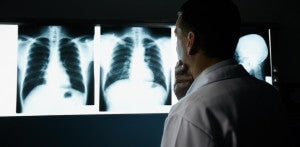 Until now, medicine has been a prestigious and often extremely lucrative career choice. But in the near future, will we need as many doctors as we have now? Are we...
Brain monitor the size of a grain of rice dissolves after use
New Scientist - 18 Jan 2016 18:00
Keeping tabs on the brain's vital signs is essential when treating people with brain injuries. A wireless dissolvable device should be safer and easier
Gene change could stop GM bacteria surviving outside the lab
New Scientist - 18 Jan 2016 18:00
In a twist on Jurassic Park's containment strategy, GMOs could be prevented from escaping into the wild by making them reliant on an artificial amino acid
Frozen quantum gas tied into knots for the first time
New Scientist - 18 Jan 2016 18:00
Exotic quantum matter has been coaxed into elegant knots, which could aid new theories of fundamental particles
Broken UV light leads to key heart muscle cell discovery
Science Daily - 18 Jan 2016 17:31
For a team of investigators trying to generate heart muscle cells from stem cells, a piece of broken equipment turned out to be a good thing. The faulty equipment pushed the researchers to try a different approach. Their...
No more needles at the dentist: Just a tiny electric current instead
Science Daily - 18 Jan 2016 17:27
If you're scared of the dentist's needles you're not alone -- but new research means you might not have to put off that appointment again. A study reveals how the dentist could give you anesthetic using a tiny electric c...
 Global
 Great Britain
 Indian
 South Africa