Science News
 American
Science News for 15 June 2016
American
Science News for 15 June 2016
LIGO sees gravitational wave from second black hole death spiral
New Scientist - 15 Jun 2016 19:15
The detector's latest discovery means we are now firmly in a new era of astronomy - it matches up convingingly with what we already know about black holes
Underlying connection found between diverse materials with extreme magnetoresistance
e! Science News - 15 Jun 2016 22:43
A new study from the Cava lab has revealed a unifying connection between seemingly unrelated materials that exhibit extreme magnetoresistance, the ability of some materials to drastically change their electrical resistan...
Four paths to the end of life, one far more expensive than others, emerge in new study
Science Daily - 15 Jun 2016 22:30 Last-ditch, high-tech heroic treatments. Days in the hospital intensive care unit. You might think this is what makes dying in America so expensive - and that it's where we should focus efforts to spend healthcare dollar...
Gut feelings
The Economist - 15 Jun 2016 21:33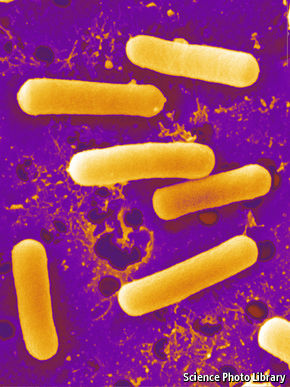 Bacterial protection service ONE of the less-known problems of obesity is that obese mothers are 50% more likely than those of normal weight to give birth to children who go on to develop autism. This correlation is perp...
Engineering the immune system to kill cancer cells
Science Daily - 15 Jun 2016 21:18
A new immunotherapy, a treatment that enhances immune system function in order to treat or prevent disease, is under developed as a means to more effectively target and kill cancer cells.
Face of the future: Researchers first to grow living bone that replicates original anatomical structure
Science Daily - 15 Jun 2016 21:17 A new technique repairs large bone defects in the head and face by using lab-grown living bone, tailored to the patient and the defect being treated. This is the first time researchers have grown living bone grown to pre...
Impact of antibiotic treatment on infant gut microbiome revealed
Science Daily - 15 Jun 2016 21:17 A comprehensive analysis of changes in the intestinal microbial population during the first three years of life has revealed some of the impacts of factors such as mode of birth -- vaginal versus cesarean section -- and ...
Gene required for sperm production in blood flukes identified
Science Daily - 15 Jun 2016 21:17
Scientists can interfere with sperm production in the parasitic blood fluke Schistosoma mansoni by blocking expression of the Nuclear Factor Y-B gene (NF-YB).
On the path toward bionic enzymes
e! Science News - 15 Jun 2016 21:12
There may soon be a new way to make molecules to form the basis of pharmaceuticals, fuels, agrochemicals, materials, and an array of other products in our modern life. Chemists at the Department of Energy's Lawrence Berk...
Depressed, Out of Work? Study Suggests Skills to Help Land a Job
Science Daily - 15 Jun 2016 20:28
Unemployed people were more likely to land a job if they used skills commonly taught as part of cognitive therapy for depression, a new study found.
Postpartum depression least severe form of depression in mothers
Science Daily - 15 Jun 2016 20:26
Postpartum depression -- a household term since actress Brooke Shields went public in 2005 about her struggle with it -- is indeed serious. But depression that begins before or during pregnancy is often more severe becau...
Microbubbles open brain's barrier to make chemo more effective
New Scientist - 15 Jun 2016 20:00
A stream of tiny bubbles and a pulse of ultrasound can open the brain's protective barrier - boosting the dose of medication that can reach brain tumours
Monkey experiments are a necessary evil for better medicine
New Scientist - 15 Jun 2016 20:00
Like it or not, primates are an essential part of biomedical research. But we must ensure the sacrifice is worthwhile, and carefully consider animals' welfare
Why we all need to fight the irrational fear of outsiders
New Scientist - 15 Jun 2016 20:00
Donald Trump and pro-Brexit campaigners are playing on understandable but irrational psychological reactions to change
We now have the tech to fingerprint babies - but should we?
New Scientist - 15 Jun 2016 20:00
Babies can now have their fingerprints taken, which could help with vaccinations and finding missing children. But the technology makes some people uneasy
Bioactive film improves how implants bond with bone in animal study
Science Daily - 15 Jun 2016 19:52
Researchers have developed a technique for coating polymer implants with a bioactive film that significantly increases bonding between the implant and surrounding bone in an animal model. The advance could significantly ...
Adolescent sleep duration is associated with daytime mood
Science Daily - 15 Jun 2016 19:52
A new study of adolescents suggests that obtaining an insufficient amount of sleep increases variability in sadness, anger, energy and feelings of sleepiness. The study also showed that nightly fluctuations in sleep in h...
On the path toward bionic enzymes
Science Daily - 15 Jun 2016 19:51 Chemists have successfully married chemistry and biology to create reactions never before possible. They did this by replacing the iron normally found in the muscle protein myoglobin with iridium, a noble metal not known...
At any skill level, making art reduces stress hormones
Science Daily - 15 Jun 2016 19:49 No matter a person's skill level, taking time to make art is likely to reduce their stress hormone levels, a new study found.
Personalized medicine will employ computer algorithms
Science Daily - 15 Jun 2016 19:49 Scientists have developed a software program enabling them to quickly compare sets of DNA of microorganisms living in different environments. The researchers have already suggested exactly how the new program could be ap...
Shorter radiation course recommended for early-stage breast cancer patients
Science Daily - 15 Jun 2016 19:47
Early-stage breast cancer patients receiving a shorter course of whole breast radiation with higher radiation doses per fraction reported equivalent cosmetic, functional and pain outcomes over time as those receiving a l...
Defining the consequences of genetic variation on a proteome-wide scale
Science Daily - 15 Jun 2016 19:47
Combining two emerging large-scale technologies for the first time -- multiplexed mass spectrometry and a mouse population with a high level of natural genetic diversity -- researchers can crack an outstanding question i...
 Global
 Great Britain
 Indian
 South Africa