Science News
 American
Science News for 17 March 2017
American
Science News for 17 March 2017
Q&A: Dark matter next door?
Symmetry Magazine - 17 Mar 2017 18:59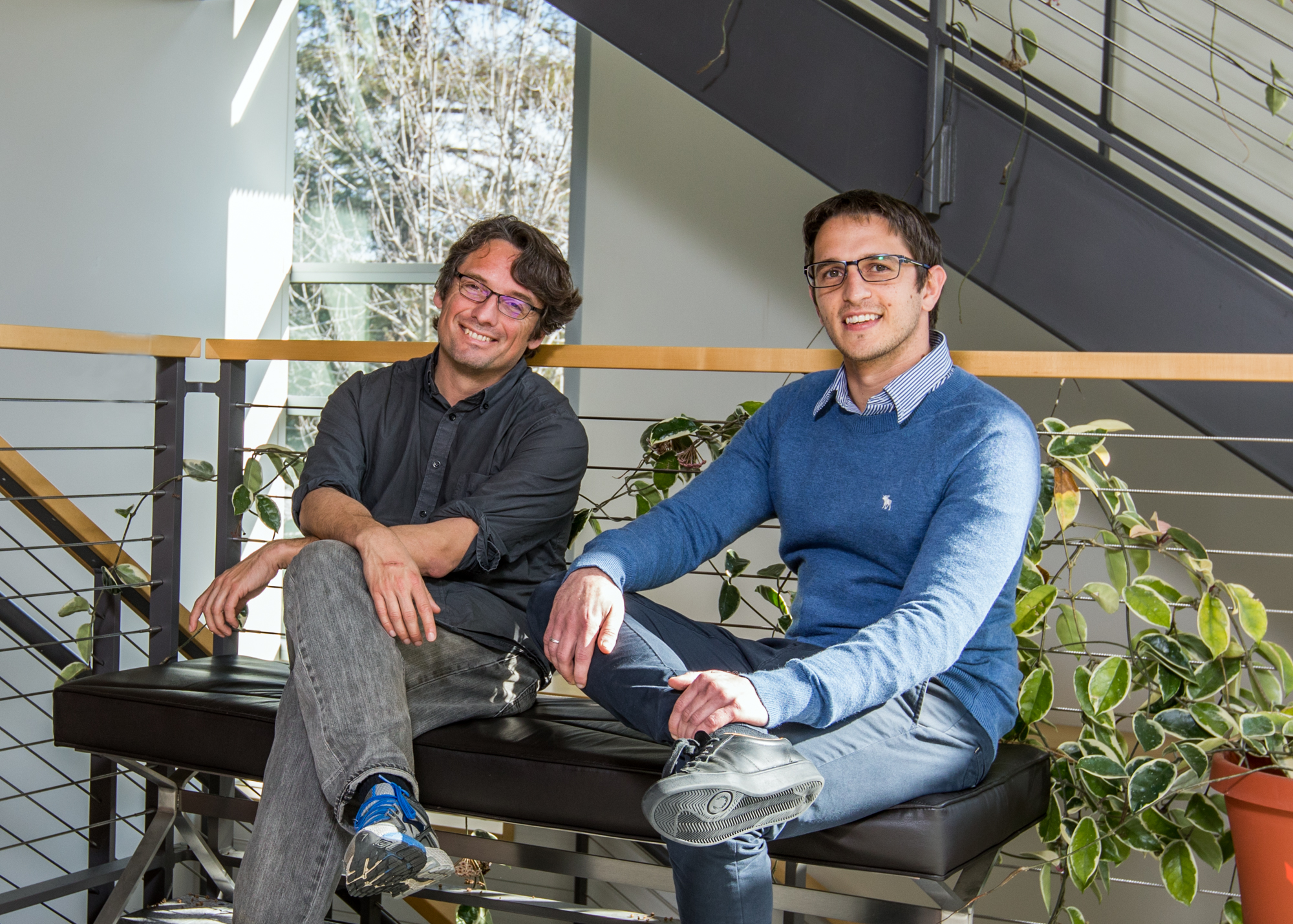 Astrophysicists Eric Charles and Mattia Di Mauro discuss the surprising glow of our neighbor galaxy. Astronomers recently discovered a stronger-than-expected glow of gamma rays at the center of the Andromeda galaxy, the ...
3D Printing Cheese for Science | Video
Live Science - 17 Mar 2017 16:16 Scientists are 3D printing cheese and comparing it to regular, processed cheese. As one does.
Can quantum theory explain why jokes are funny?
Phys.org - 17 Mar 2017 16:24 Why was 6 afraid of 7? Because 789. Whether this pun makes you giggle or groan in pain, your reaction is a consequence of the ambiguity of the joke. Thus far, models have not been able to fully account for the complexity...
Cosmological ruler could help us get the measure of dark energy
New Scientist - 17 Mar 2017 13:08
Measuring how the distance between galaxies changes is key to working out how dark energy drives the universe's accelerating expansion - now a new ruler may help
Advanced form of proton therapy shows promise for treating lung cancer recurrence
Science Daily - 17 Mar 2017 20:54
An advanced form of image-guided radiation therapy, known as intensity modulated proton therapy (IMPT), has shown early promise for the treatment of recurrent lung cancer, according to new research.
Happy spouse, happy house
Science Daily - 17 Mar 2017 20:05
Achieving marital quality could seem daunting, even impossible to any couple, let alone a couple in which one of the partners is dealing with a serious illness. But a new study may hold the answer, say its authors.
Making US workers pass genetic test data to employers is wrong
New Scientist - 17 Mar 2017 20:00
A proposed law effectively allowing US employers to require workers to take DNA tests and hand over the results is misguided, says geneticist Martina Cornel
Evolocumab significantly reduces risk of cardiovascular events
Science Daily - 17 Mar 2017 19:20
Evolocumab, one of the new targeted PCSK9 inhibitor drugs that has been shown to dramatically lower levels of low-density lipoprotein (LDL), or "bad" cholesterol, also significantly lowers the risk of cardiovascular even...
Exergaming can reduce sedentary time, increase social wellbeing
Science Daily - 17 Mar 2017 19:20
Digital gaming has generally been perceived to increase individuals' sedentary time. According to a new dissertation, gaming can also act as a medium to promote health. Exergaming is a form of digital gaming that combine...
Fat cells step in to help liver during fasting
Science Daily - 17 Mar 2017 19:16 How do mammals keep two biologically crucial metabolites in balance during times when they are feeding, sleeping, and fasting? The answer may require rewriting some textbooks, say investigators.
Link between Vitamin D treatment and autism prevention
Science Daily - 17 Mar 2017 19:15 Giving vitamin D supplements to mice during pregnancy prevents autism traits in their offspring, researchers have discovered. The discovery provides further evidence of the crucial role vitamin D plays in brain developme...
Researchers review progress of treating glutamate signalling in depression
Science Daily - 17 Mar 2017 19:15
Major depressive disorder (MDD) impacts 15 million Americans and is the leading cause of disability, yet current treatments possess limited efficacy. Ketamine, which has been repurposed as a rapidly acting antidepressant...
New study finds antithrombotic therapy has no benefit for low-risk atrial fibrillation patients
Science Daily - 17 Mar 2017 19:15
Findings from a large, community-based study show that antithrombotic therapy doesn't decrease low-risk atrial fibrillation patients' risk of suffering a stroke within five years.
New study finds people who have high levels of two markers at high risk of adverse heart events
Science Daily - 17 Mar 2017 19:15
New research suggests that GlycA, a newly identified blood marker, and C-reactive protein both independently predict major adverse cardiac events, including heart failure and death. Patients who have high levels of both ...
Transcatheter aortic valve replacement as effective as surgery in intermediate patients
Science Daily - 17 Mar 2017 19:15
Medtronic plc (NYSE: MDT) today unveiled first-ever clinical data from the Surgical Replacement and Transcatheter Aortic Valve Implantation (SURTAVI) Trial.
Osteoporosis drug found safe in long-term trial
Science Daily - 17 Mar 2017 19:15
A new study provides reassuring information about the short-term and long-term safety of denosumab, a monoclonal antibody that is used to treat postmenopausal osteoporosis.
Patients' annual financial burden under Medicare Part D is 'too much too soon'
Science Daily - 17 Mar 2017 19:12
A study documents the patient out-of-pocket cost burden under Medicare prescription drug plans (known as Medicare Part D) and finds that despite having insurance, Medicare patients using specialty drugs paid thousands of...
New 'gene silencer' drug reduce cholesterol by over 50 percent
Science Daily - 17 Mar 2017 19:12 The first in a new class of gene-silencing drugs, known as inclisiran, has been shown to halve cholesterol levels in patients at risk of cardiovascular disease.
Pharmacist medicines reconciliation reduces likelihood of patient harm
Science Daily - 17 Mar 2017 19:12
Medicines reconciliation provided by pharmacists can significantly reduce medicine discrepancies and may be associated with reductions in length of hospital stay and readmission, a new report concludes.
Moderate exercise may be beneficial for HCM patients
Science Daily - 17 Mar 2017 19:12 Patients with hypertrophic cardiomyopathy are urged to take it easy. But new research shows they might benefit from moderate aerobic exercise.
Support people with asthma to manage their illness, researchers say
Science Daily - 17 Mar 2017 19:12
Every person with asthma should have access to a personal action plan to help them control their condition, researchers say. Helping people with asthma take control of their own illness reduces symptoms, improves quality...
Human skull evolved along with two-legged walking, study confirms
Science Daily - 17 Mar 2017 19:12 The evolution of bipedalism in fossil humans can be detected using a key feature of the skull -- a claim that was previously contested but now has been further validated by researchers.
 Global
 Great Britain
 Indian
 South Africa