Science News
 American
Science News for 10 April 2018
American
Science News for 10 April 2018
We can read memories by analysing brain gene activity
New Scientist - 10 Apr 2018 18:50
Memories have unique genetic signatures that reveal what they are. The finding could lead to ways to read and alter memories in people with PTSD or phobias
This Memory Prosthesis Boosts Recall in Humans by Roughly 40 Percent
Singularity Hub - 10 Apr 2018 17:00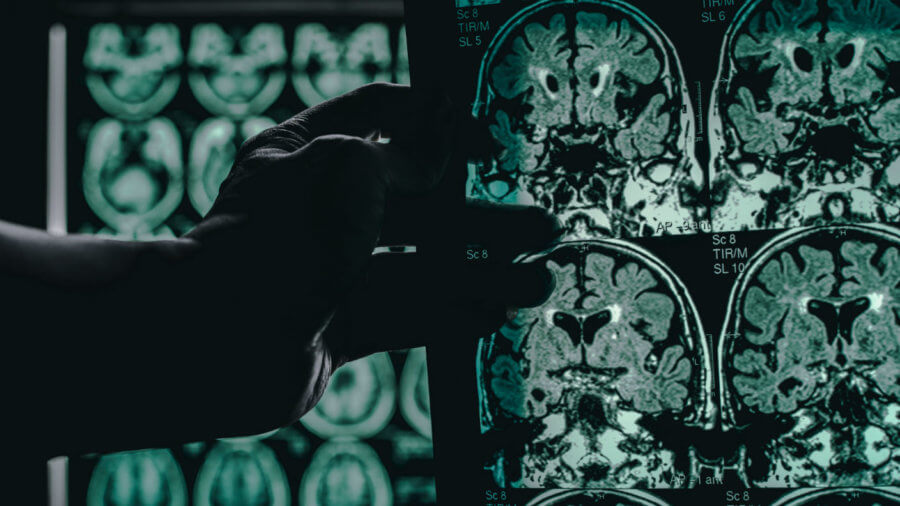 This one's for the books: in a jaw-dropping study, a team just turned the human brain from a read-only memory device to a rewritable one. “What?” you might ask. Of course the brain is rewritable. It's constantly usin...
Harnessing 'Rashba spin-Seebeck effect' phenomenon will enable commercial devices to turn waste heat into electricity
Phys.org - 10 Apr 2018 13:39 Mechanical engineers at the University of California, Riverside, have reported success in using inexpensive materials to produce thermoelectric devices that transform low-level waste heat into electricity.
New sodium-ion electrolyte may find use in solid-state batteries
EurekAlert! - 10 Apr 2018 06:00
(Penn State) A newly discovered structure of a sodium-based material allows the materials to be used as an electrolyte in solid-state batteries, according to researchers from Penn State and Pacific Northwest National Lab...
Cohesive neighborhoods, less spanking result in fewer child welfare visits
Science Daily - 10 Apr 2018 22:11
The child welfare system is more likely to intervene in households in 'less neighborly' neighborhoods and in which parents spank their kids.
Tiny injectable sensor could provide unobtrusive, long-term alcohol monitoring
Science Daily - 10 Apr 2018 22:11 Engineers have developed a tiny, ultra-low power chip that could be injected just under the surface of the skin for continuous, long-term alcohol monitoring. The chip is powered wirelessly by a wearable device such as a ...
Cancer risk rises as patients wait for diagnostic testing
Science Daily - 10 Apr 2018 22:11
The longer a patient with a positive screening result waits for diagnostic testing, the worse their cancer outcomes may become, according to a literature review of breast, cervical, colorectal, and lung studies.
Humans and others exposed to prenatal stress have high stress levels after birth
Science Daily - 10 Apr 2018 22:11 Vertebrate species, including humans, exposed to stress prenatally tend to have higher stress hormones after birth, according to a new study. While previous research has reported examples of maternal stress experience pr...
Making computer animation more agile, acrobatic -- and realistic
Science Daily - 10 Apr 2018 22:11 Animation in film and video games is hard to make realistic: each action typically requires creating a separate controller, while deep reinforcement learning has yet to generate realistic human or animal motion. Computer...
Man Develops Severe 'Thunderclap' Headaches After Eating World's Hottest Chili Pepper
Neuroscience News - 10 Apr 2018 21:26
A new study in BMJ Case Reports warns of the unexpected consequences of participating in hot chili pepper eating contests.
Later School Start Times Really Do Improve Sleep Time
Neuroscience News - 10 Apr 2018 19:41
Researchers reveal later school start times improve sleep quality in children.
Does physical activity influence the health of future offspring?
Science Daily - 10 Apr 2018 19:29
Physical and mental exercise is not only beneficial for your own brain, but can also affect the learning ability of future offspring -- at least in mice.
Marriage reduces depression in couples earning less than $60,000 per year, study finds
Science Daily - 10 Apr 2018 19:28
People who are married and earning less than $60,000 per year in total household income have fewer symptoms of depression than comparable earning unmarried people, but for couples earning more, marriage doesn't show the ...
Life on nearest exoplanet may have been wiped out by superflare
New Scientist - 10 Apr 2018 19:18
Bad news for life near Proxima Centauri - the star has been seen emitting explosive blasts of radiation that would destroy the ozone on its Earth-like planet
Discovery Sheds Light on How Neurodegenerative Diseases May Occur
Neuroscience News - 10 Apr 2018 18:57
Researchers report nitric oxide plays a key role in regulating neural function. The findings shed new light on how neurodegeneration may occur.
Optimized Perception in the Twilight Zone
Neuroscience News - 10 Apr 2018 18:53
A new study reveals our brains process weak visual stimuli better in the evenings and mornings than during daylight hours. Researchers say the transition from light to dark has greater influence on visual perception than...
How to make a Higgs boson
Symmetry Magazine - 10 Apr 2018 18:48
It doesn't seem like collisions of particles with no mass should be able to produce the "mass-giving" boson, the Higgs. But every other second at the LHC, they do. Einstein's most famous theory, often written as E=mc2, t...
Stealing Design Secrets from the Unexpected Master of Origami
Physics Buzz - 10 Apr 2018 18:25
According to folklore, earwigs like to crawl through the ears of sleeping humans, burrow into their brains, and lay eggs. Perhaps for this reason, or maybe because of their large rear-end pinchers, these insects tend to ...
Mini toolkit for measurements: New NIST chip hints at quantum sensors of the future
Phys.org - 10 Apr 2018 18:21 Researchers at the National Institute of Standards and Technology (NIST) have created a chip on which laser light interacts with a tiny cloud of atoms to serve as a miniature toolkit for measuring important quantities su...
Alzheimer's Disease Redefined
Neuroscience News - 10 Apr 2018 18:11
Researchers have published a new research framework that defines Alzheimer's disease by brain changes, not symptoms.
Metamaterial device controls transmission and reflection of acoustic waves
Phys.org - 10 Apr 2018 18:05 Metamaterials researchers at Duke University have demonstrated the design and construction of a thin material that can control the redirection and reflection of sound waves with almost perfect efficiency.
Our eyesight is sharpest at twilight - and now we may know why
New Scientist - 10 Apr 2018 18:00
We see best at dawn and dusk, and this could be because our brain activity changes at these times, making it easier to distinguish signals from background noise
 Global
 Great Britain
 Indian
 South Africa