Science News
 American
Science News for 23 January 2019
American
Science News for 23 January 2019
How to Destroy the Earth in 3 Easy Steps
Live Science - 23 Jan 2019 13:38 Mad scientists through the ages have dreamed of holding the world hostage by threatening to destroy the whole thing. Here's how that could work.
CRISPR Just Got More Powerful With an "On" Switch
Singularity Hub - 23 Jan 2019 17:00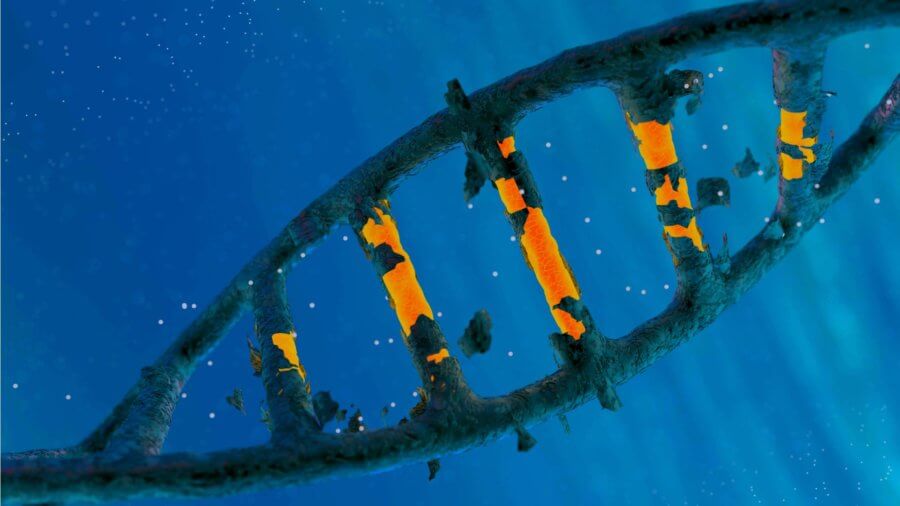 For all its gene-editing prowess, mechanistically CRISPR is a bit like a power tool with a broken "off" switch. Hear me out: the entire CRISPR machinery is designed in a test tube, and once constructed it's always on. Wh...
Child's Age at Parental Divorce Can Affect Antidepressant Use as Adults
Neuroscience News - 23 Jan 2019 23:01
A new study reports children whose parents divorced when they were teens are less likely to develop depression or use antidepressants as children whose parents spilt up before they were four years old.
Old Cells Repair Damage in Brains of Those with Multiple Sclerosis
Neuroscience News - 23 Jan 2019 22:51
Researchers discovered oligodendrocyte neurogenesis is limited in the brains of patients with Multiple Sclerosis. However, oligodendrocytes that survive the autoimmune attack associated with MS may be able to form new my...
Breastmilk Sugars Differ in Pregnant Women on Probiotics
Neuroscience News - 23 Jan 2019 22:48
Researchers report human milk oligosaccharides, complex sugars in human breastmilk, may change in pregnant women who are taking probiotics.
Cannabis Use Disorder More Prevalent in Conservative States
Neuroscience News - 23 Jan 2019 21:50
Researchers report young adults who live in states with liberal policies are more likely to have used cannabis within the last year than those living in more conservative states. However, the rate of cannabis use disorde...
Childhood Lead Exposure Linked to Poor Adult Mental Health
Neuroscience News - 23 Jan 2019 21:48
A new study reveals lead exposure during childhood can significantly impact mental health and personality traits later in life. Researchers found exposure to leaded gasoline prior to the 1990s was linked to increased psy...
Shedding Light on Brain Cell Changes in Multiple Sclerosis
Neuroscience News - 23 Jan 2019 21:44
A new study sheds light on brain cells implicated in multiple sclerosis. Researchers found there are several types of oligodendrocytes, and the ratio of these cells differ significantly in those with MS. The findings cou...
The moon's violent birth may have given Earth the ingredients of life
New Scientist - 23 Jan 2019 21:00
We think the moon formed when a Mars-sized object crashed into the young Earth. The same object could also have brought the carbon and other elements we need for life
Married people have stronger hands than those who are single
New Scientist - 23 Jan 2019 21:00
Among men aged 50 or higher those who are married have a stronger grip than bachelors - and remarried men have the strongest grip of all
Tumour-killing virus could stop a childhood eye cancer and save vision
New Scientist - 23 Jan 2019 21:00
A virus that kills cancer cells could save the vision of children who have a rare eye cancer and often require eye removal surgery
Targeted Treatment Shrinks Deadly Pediatric Brain Cancer Tumors
Neuroscience News - 23 Jan 2019 20:55
Researchers report a targeted therapy that blocks LSD1 effectively shrinks tumor size in mouse models of medulloblastoma, a form of pediatric brain cancer.
Physical Activity Can Prevent Against Depression
Neuroscience News - 23 Jan 2019 20:51
A new study adds to growing evidence that higher levels of physical activity can help reduce the risk of developing mental illness. Researchers found physical activity can reduce depression risks in those genetically vul...
Powerful whole-species gene editing tool fails first tests in mice
New Scientist - 23 Jan 2019 20:00
A gene drive for mice could be very useful for studying diseases, but does not work nearly well enough to work as a tool for eliminating invasive rodents
All you want to know about fatbergs but are too disgusted to ask
New Scientist - 23 Jan 2019 20:00
Huge lumps of fat and waste keep appearing in sewers, particularly in the UK - are they really on the rise, or are we just paying more attention?
Human or hybrid? The big debate over what a species really is
New Scientist - 23 Jan 2019 20:00
Humans once mated with Neanderthals so are we hybrids? How we see ourselves and the rest of nature is changing, raising the question of whether species even exist
8 ways to keep your brain young and stave off mental decline
New Scientist - 23 Jan 2019 20:00
Want to defy ageing and keep your mind sharp? From the right diet to your dental hygiene and social life, here are the best ways to keep your brain fighting fit
Algorithm that can see around corners could help autonomous cars
New Scientist - 23 Jan 2019 20:00
An algorithm can reconstruct images that are hidden behind a wall. It may help autonomous cars spot hazards before they come into view
To feed 11 billion people, we must share crop seeds as a common good
New Scientist - 23 Jan 2019 20:00
Patent-free seeds can diversify our food supply and fight climate change, say Johannes Kotschi and Bernd Horneburg
Prototyping in Tokyo review - Imagining a future full of lifelike tech
New Scientist - 23 Jan 2019 19:13
Is art more likely than old-school engineering to create the lifelike quality we will need in a world we share with machines? A robot show has surprising answers
New technology uses lasers to transmit audible messages to specific people
Phys.org - 23 Jan 2019 19:09 Researchers have demonstrated that a laser can transmit an audible message to a person without any type of receiver equipment. The ability to send highly targeted audio signals over the air could be used to communicate a...
Remote-control plasma physics experiment is named one of top Webcams of 2018
Phys.org - 23 Jan 2019 17:19 Want to create your own plasma? You can create and control a plasma from the comfort of your own device.
 Global
 Great Britain
 Indian
 South Africa