Science News
 American
Science News for 4 February 2019
American
Science News for 4 February 2019
Diversity in the CD4 receptor protects chimpanzees from infection by AIDS-like viruses
Science Daily - 4 Feb 2019 22:40
Medical researchers have found that the CD4 surface protein, which is used by HIV and SIV as the receptor to enter immune cells, is highly variable among wild chimpanzees. Understanding how these viruses are transmitted ...
Heat waves, food insecurity due to climate change may weaken immune systems
Science Daily - 4 Feb 2019 22:40
Heat waves can reduce the body's immune response to flu, according to new research. The results have implications for how climate change may affect the future of vaccinations and nutrition. Researchers have investigated ...
New wisdom about high cholesterol treatment for adults aged 80 and older
Science Daily - 4 Feb 2019 21:23
A team of researchers decided to learn more about whether current triglyceride-level guidelines make sense for people aged 80 and older.
Cost effectiveness of early cancer surveillance
Science Daily - 4 Feb 2019 21:06
New research shows how early cancer screening and surveillance in patients with Li-Fraumeni syndrome (LFS) results in additional years of life, and is cost effective for third-party payers.
Mother's age, race, weight affect hormone concentrations in pregnancy
Science Daily - 4 Feb 2019 21:06
Hormone concentrations during early fetal development -- that may affect the child's development and increase the mother's risk for breast and ovarian cancer years later -- are significantly affected by maternal age, bod...
Genetic study of impulsiveness reveals associations with psychiatric disorders
Science Daily - 4 Feb 2019 20:25
Impulsiveness and substance use share a genetic basis, according to genome-wide association studies. With more than 20,000 participants, the research represents the largest genetic analysis of impulsive personality trait...
Boosting glutamate reduces anxiety in monkeys
Science Daily - 4 Feb 2019 20:25
Researchers studying male and female marmosets have homed in on the primate brain circuitry responsible for individual differences in overall anxiety. Their findings show that increasing levels of the neurotransmitter gl...
Prediction tool for kidney stones
Science Daily - 4 Feb 2019 19:42
Kidney stones are a common and painful condition, with many sufferers experiencing recurrent episodes. Most people who pass an initial stone want to know their chances of future episodes, but this has not always been eas...
Shared genetic marker offers new promise in targeting specific ovarian and lung cancers
Science Daily - 4 Feb 2019 19:42
Two new articles offer promise that a drug currently used to treat estrogen positive breast cancer may be effective in treating two different types of cancer, one rare and one common form.
Insight into protein formation could aid understanding of diseases
Science Daily - 4 Feb 2019 18:46
Research explains details of a biological process that supports the production of healthy cells, by removing faulty proteins as they form.
Fatal opioid-related car crashes in maryland hold steady over decade
Science Daily - 4 Feb 2019 18:46
A new approach to defining opioid-related auto fatalities provides insight into the nature and distribution of opioid-involved deaths in the state of Maryland.
Yeast study prompts rethink of DNA safekeeping
Science Daily - 4 Feb 2019 18:46
DNA replication is more prone to errors at times of stress leading to mutations that could cause disease.
A gut feeling for mental health
Science Daily - 4 Feb 2019 18:46
The first population-level study on the link between gut bacteria and mental health identifies specific gut bacteria linked to depression and provides evidence that a wide range of gut bacteria can produce neuroactive co...
Excess immune pruning of synapses in neural cells derived from patients with schizophrenia
Science Daily - 4 Feb 2019 18:46
Investigators have found evidence that the process of synaptic pruning, a normal part of brain development during adolescence, is excessive in individuals with schizophrenia. The study is the first to directly observe ex...
Neuroscientists Just Found a Way to Image the Brain 1,000 Times Faster Than Ever Before
Singularity Hub - 4 Feb 2019 17:00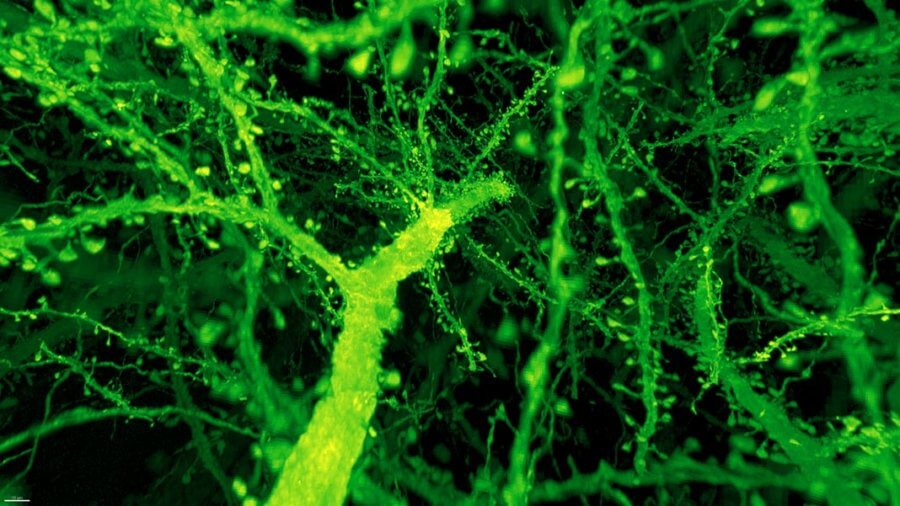 You know those stories of scientific breakthroughs, in which the lone genius scientist struggles for years until his "eureka!" moment? Yeah, that's a lie. With the big data revolution well under way, today scientific dis...
Physicists uncover the topological origin of surface electromagnetic waves
Phys.org - 4 Feb 2019 16:49 In work that provides insights for several areas of wave physics, including Maxwell electromagnetism, topological quantum states, and plasmonics/metamaterials, scientists have shown that the well-known surface electromag...
Glass fibers and light offer new control over atomic fluorescence
Phys.org - 4 Feb 2019 15:58 Electrons inside an atom whip around the nucleus like satellites around the Earth, occupying orbits determined by quantum physics. Light can boost an electron to a different, more energetic orbit, but that high doesn't l...
Confused about cancer? Here's what we really do know about its causes
New Scientist - 4 Feb 2019 13:45
We are bombarded with stories about things that might give us cancer, yet even the experts don't seem sure. So what's the best way to judge the risks?
Scientists exploit gel polymer electrolyte for high performance magnesium batteries
EurekAlert! - 4 Feb 2019 07:00
(Chinese Academy of Sciences Headquarters) A research team led by Prof. CUI Guanglei from the Qingdao Institute of Bioenergy and Bioprocess Technology (QIBEBT) of the Chinese Academy of Sciences exploited a novel rigid-f...
Researchers develop new method to reduce quantum noise
Phys.org - 4 Feb 2019 23:08 In a recent issue of Physical Review A, Argonne researchers reported a new method for alleviating the effects of "noise" in quantum information systems, a challenge scientists around the globe are working to meet in the ...
Gut Bacteria Linked to Depression Identified
Neuroscience News - 4 Feb 2019 22:44
A new study reports two different gut bacteria are depleted in people with depression, regardless of antidepressant treatments.
Boosting Glutamate Reduces Anxiety in Monkeys
Neuroscience News - 4 Feb 2019 22:42
Increasing glutamate levels in the hippocampus helps to reduce anxiety in monkeys, a new study reports.
 Global
 Great Britain
 Indian
 South Africa