Science News
 American
Science News for 4 March 2020
American
Science News for 4 March 2020
Micromotors get supercharged with three 'engines'
EurekAlert! - 4 Mar 2020 07:00
(American Chemical Society) Someday, microscopic robots could perform useful functions, such as diagnostic testing in lab-on-a-chip sensors, micropatterning surfaces or repairing equipment in tight spaces. But first, sci...
Hormone that causes women to experience more pain than men identified
Neuroscience News - 4 Mar 2020 23:13
Researchers report the hormone prolactin, more commonly associated with lactation in new mothers, may underlie why women are more vulnerable to developing functional pain syndromes than men.
How to make sourdough bread by harnessing wild yeast and bacteria
New Scientist - 4 Mar 2020 20:00
To make your own sourdough bread, you need to create an environment where wild yeast and bacteria want to hang out. Sam Wong explains how
New insights into evolution: Why genes appear to move around
Science Daily - 4 Mar 2020 21:16
Scientists have proposed an addition to the theory of evolution that can explain how and why genes move on chromosomes. The hypothesis is called the SNAP Hypothesis.
Biomaterial discovery enables 3D printing of tissue-like vascular structures
Science Daily - 4 Mar 2020 21:15
An international team of scientists have discovered a new material that can be 3D printed to create tissue-like vascular structures.
Breastfeeding and risks of allergies and asthma
Science Daily - 4 Mar 2020 21:15
In an Acta Paediatrica study, exclusive breastfeeding for the first 3 months was linked with a lower risk of respiratory allergies and asthma when children reached 6 years of age.
Novel compound sparks new malaria treatment hope
Science Daily - 4 Mar 2020 21:15
A novel class of antimalarial compounds that can effectively kill malaria parasites has been developed. In preclinical testing, the compounds were effective against different species of malaria parasites, including the d...
Fighting hand tremors: First comes AI, then robots
Science Daily - 4 Mar 2020 21:14
Robots hold promise for a large number of people with neurological movement disorders severely affecting the quality of their lives. Now researchers have tapped artificial intelligence techniques to build an algorithmic ...
New material could turn clothing into a health monitor
Science Daily - 4 Mar 2020 21:14
Researchers have reported a new material, pliable enough to be woven into fabric but imbued with sensing capabilities that can serve as an early warning system for injury or illness.
A theoretical approach to understand the mechanisms of 3-D spatiotemporal mode-locking
Phys.org - 4 Mar 2020 16:30 Laser technology confines light inside a resonator containing a gain medium, a material with quantum properties that can amplify light. As laser resonators are generally far larger than the wavelength of light, lasing in...
Coherent phonon dynamics realized in spatially separated mechanical resonators
Phys.org - 4 Mar 2020 16:03 A research group led by Prof. Guo Guoping, Song Xiangxiang, Deng Guangwei (now at UESTC), from University of Science and Technology of China (USTC) of the Chinese Academy of Sciences, in collaboration with Prof. Tian Lin...
SMART announces revolutionary new process for scientific applications
EurekAlert! - 4 Mar 2020 07:00
(Singapore-MIT Alliance for Research and Technology (SMART)) Researchers at Singapore-MIT Alliance for Research and Technology (SMART) and National University Singapore (NUS) have developed a unique method for generating...
Fauna, as much as flora, govern susceptibility to wildfires
The Economist - 4 Mar 2020 23:48
THE WORLD is warming. All else being equal, that warming will promote wildfires. One job which human beings face in the future is therefore to ensure that all else is not equal. And that means understanding how those fir...
Our eye movements help us retrieve memories
Neuroscience News - 4 Mar 2020 22:55
People move their eyes to determine whether or not they have seen an image before. Their eye movement patterns could predict memory mistakes. Findings reveal eye movements play a functional role in memory retrieval.
Silent earthquakes are tied to changes in fluid deep below Cascadia's fault
Live Science - 4 Mar 2020 22:42 Fluid pressures in the Cascadia subduction zone are linked to regular, imperceptible earthquakes.
Five amazing facts about your brain
Neuroscience News - 4 Mar 2020 22:39
Do you know how many milliliters of blood is delivered to the brain per heartbeat, or whether you experience pain during brain surgery? Researchers explore five things you probably didn't know about the human brain.
The 12 deadliest viruses on Earth
Live Science - 4 Mar 2020 21:36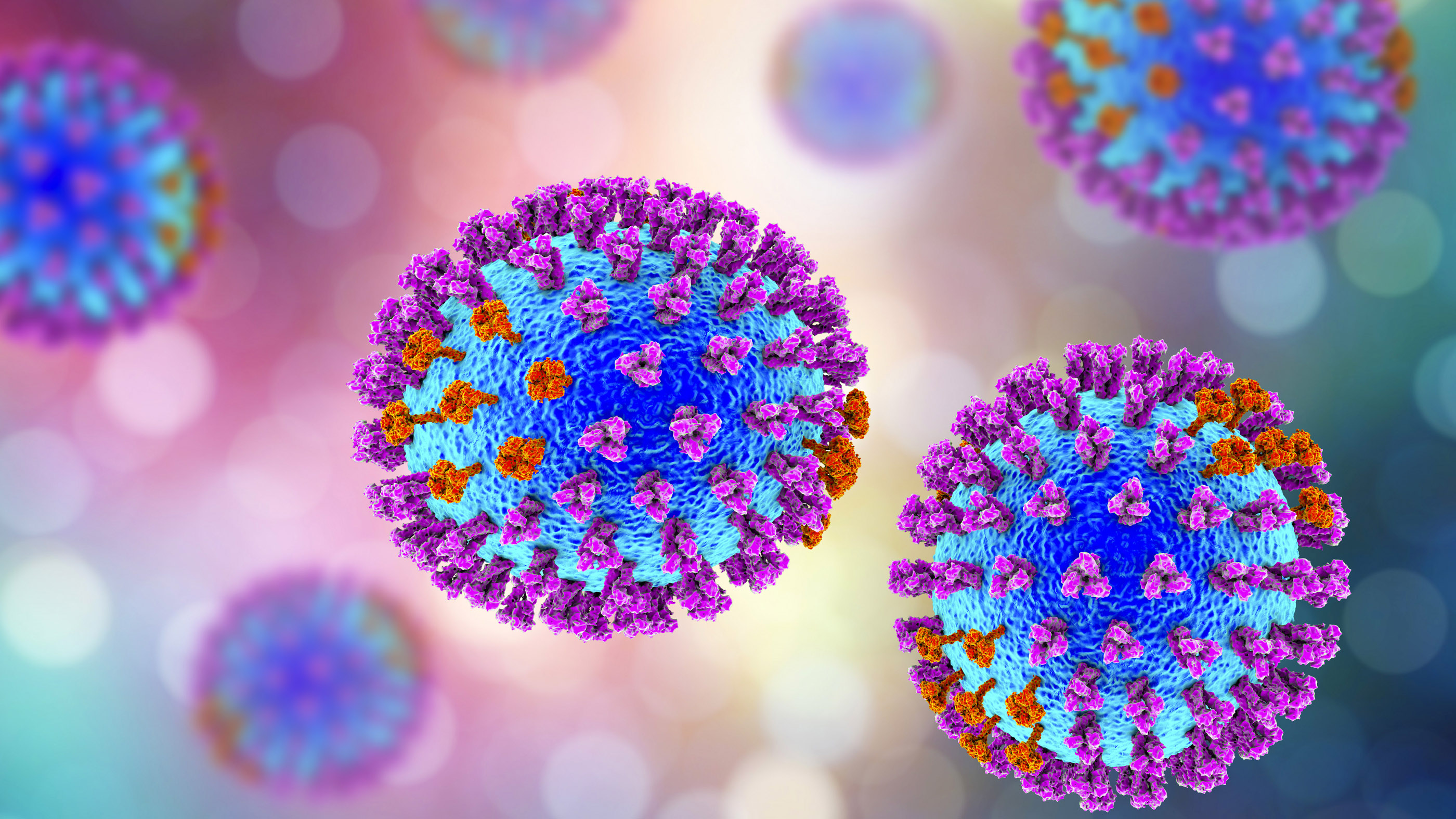 Humans have been fighting viruses throughout history. Here are the 12 viruses that are the world's worst killers, based on their mortality rates, or the sheer numbers of people they have killed.
Smoking bans don't prevent you having to breathe in smoke particles
New Scientist - 4 Mar 2020 21:00
It is possible to passively smoke in places where smoking is banned, because harmful tobacco chemicals remain on people's bodies and clothes and in the air
How smell, emotion, and memory are intertwined, and exploited
Neuroscience News - 4 Mar 2020 20:54
Researchers explore how certain scents often elicit specific emotions and memories in people, and how marking companies are manipulating the link for branding.
Household chemical use linked to child language delays
Neuroscience News - 4 Mar 2020 20:39
Exposure to household toxicants, including cleaning products and pesticides, was associated with delayed language and cognitive development in young children.
The secret to killing cancer may lie in its deadly power to evolve
New Scientist - 4 Mar 2020 20:00
By closely tracking how cancer cells evolve in our bodies, we can identify their hidden weaknesses and find powerful new ways to treat tumours
Greenwood review: Can humanity survive a tree apocalypse?
New Scientist - 4 Mar 2020 20:00
It's 2038 and Earth's trees are dead, bar some firs on a tiny island. The tale of what happened is an epic combining sci-if, mystery and an exposé of capitalism, says Sally Adee
 Global
 Great Britain
 Indian
 South Africa