Science News
 American
Science News for 10 June 2020
American
Science News for 10 June 2020
How South America became the new centre of the coronavirus pandemic
New Scientist - 10 Jun 2020 13:40
Coronavirus cases are rising sharply in South America, made worse by inequality, economic instability and the actions of Brazil's president Jair Bolsonaro
Theon-Kepler bifocal telescope helps advance radial-shearing interferometry
Phys.org - 10 Jun 2020 16:06 Recently, researchers at Shanghai Institute of Optics and Fine Mechanics of the Chinese Academy of Sciences have proposed a new kind of telescope structure, a Theon-Kepler bifocal telescope, to realize radial-shearing in...
Skoltech researchers use machine learning to aid oil production
EurekAlert! - 10 Jun 2020 06:00
(Skolkovo Institute of Science and Technology (Skoltech)) Skoltech scientists and their industry colleagues have found a way to use machine learning to accurately predict rock thermal conductivity, a crucial parameter fo...
Will lockdown loneliness make us loners?
Neuroscience News - 10 Jun 2020 23:27 Social preference in isolated zebrafish is caused by stress and anxiety, not observed anti-social patterns.
New genetic defect linked to ALS
Neuroscience News - 10 Jun 2020 23:09 Researchers have identified how specific genetic mutations cause ALS. The pathway, they believe, may also be responsible for the development of frontotemporal dementia.
Researchers forecast stable, slightly declining levels of COVID-19 entering fall
Neuroscience News - 10 Jun 2020 21:11 New coronavirus model finds case spread is concave, meaning the impact of one more infected person diminishes as more people become infected.
An artist carved this tiny bird sculpture 13,000 years ago in China
New Scientist - 10 Jun 2020 21:00
A carving of a bird less than 2 centimetres long was probably shaped 13,000 years ago, making it one of the oldest known sculptures discovered in China
Turning the spleen into a liver saves mice from fatal organ damage
New Scientist - 10 Jun 2020 21:00
The spleens of live mice can be transformed into liver-like organs as a treatment for severe liver damage that could one day replace transplants in humans
Study of 62 countries finds people react similarly to everyday situations
Neuroscience News - 10 Jun 2020 20:49 Study finds the world is a much more similar and unified place than we thought.
Marijuana concentrates spike THC levels but don't boost impairment
Neuroscience News - 10 Jun 2020 20:04 High-potency marijuana boosts the blood level of THC more than 50% more than smoking lower-potency cannabis, but it doesn't necessarily make you higher or impair cognition more, a new study reports.
How brain scanners can help us revolutionise psychiatric drugs
New Scientist - 10 Jun 2020 20:00
Most psychiatric drugs were developed before brain scans existed. Now neuroscientist Mitul Mehta is using scans of people under the influence of drugs or hypnosis to help develop better treatments
The biggest dinosaur ever may have been twice the size we thought
New Scientist - 10 Jun 2020 20:00
A near-mythical titanosaur could have been twice as heavy as Patagotitan, the dinosaur previously thought to be the largest animal ever to walk the Earth
Amazing Black scientists
Live Science - 10 Jun 2020 19:42 Black scientists have contributed to society and made groundbreaking discoveries throughout history and continue to do so to this day. Here's a look at just a few of the amazing Black scientists from the past and present...
Acoustics put a fresh spin on electron transitions
Phys.org - 10 Jun 2020 19:24 Electrons are very much at the mercy of magnetic fields, which scientists can manipulate to control the electrons and their angular momentum--i.e. their "spin."
How the brain controls our speech
Neuroscience News - 10 Jun 2020 19:03 A new study casts doubt on common theories about speech control. Researchers discovered it's not just the right hemisphere that analyzes how we speak, the left hemisphere also plays a significant role.
First confirmation of new theory by metamaterial
Phys.org - 10 Jun 2020 16:24 Topological metamaterials are applied as a novel platform to explore and study extraordinary effects. Instead of using natural materials, researchers artificially arrange the constituents of a topological metamaterial in...
Evolution: Why It Seems to Have a Direction and What to Expect Next
Singularity Hub - 10 Jun 2020 16:00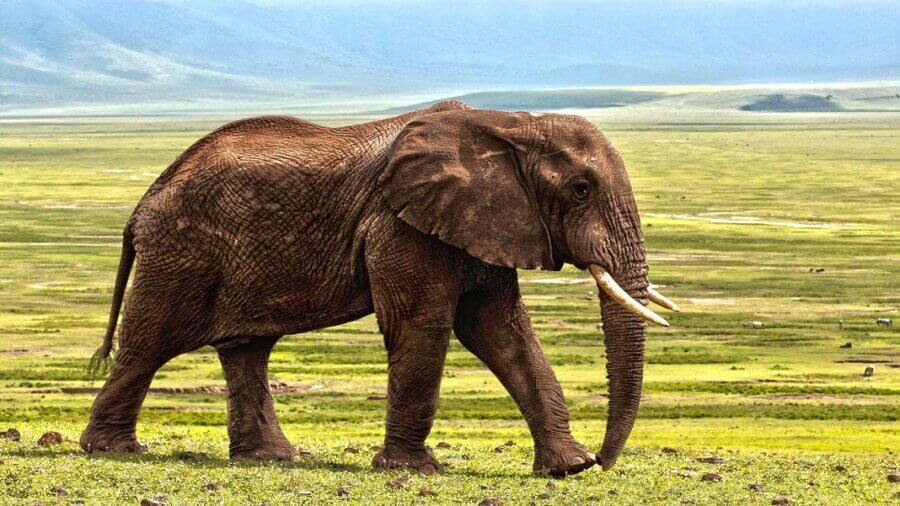 The diversity and complexity of life on Earth is astonishing: 8 million or more living species--from algae to elephants--all evolved from a simple, single-celled common ancestor around 3.5 billion years ago. But does tha...
Signatures of fractional electronic charge observed in topological insulators
Phys.org - 10 Jun 2020 15:57 The charge of a single electron, e, is defined as the basic unit of electric charge. Because electrons--the subatomic particles that carry electricity--are elementary particles and cannot be split, fractions of electroni...
Team solves old mystery, paving way toward advances in medicine, industry, environmental science
Phys.org - 10 Jun 2020 15:51 An Oregon State University environmental engineering professor has solved a decades-old mystery regarding the behavior of fluids, a field of study with widespread medical, industrial and environmental applications.
What a bike moving at near the speed of light might look like to a human observer
Phys.org - 10 Jun 2020 15:20 A pair of researchers at Surrey University has attempted to show what a bicycle moving at near the speed of light might look like to a human observer. In their paper published in the journal Proceedings of the Royal Soci...
Human eggs release chemicals that attract some sperm more than others
New Scientist - 10 Jun 2020 15:15
A person's eggs release chemicals after sex that preferentially attract sperm from certain people, which might help explain why some people have fertility problems
Live Science stands with #ShutDownSTEM and #Strike4BlackLives
Live Science - 10 Jun 2020 14:44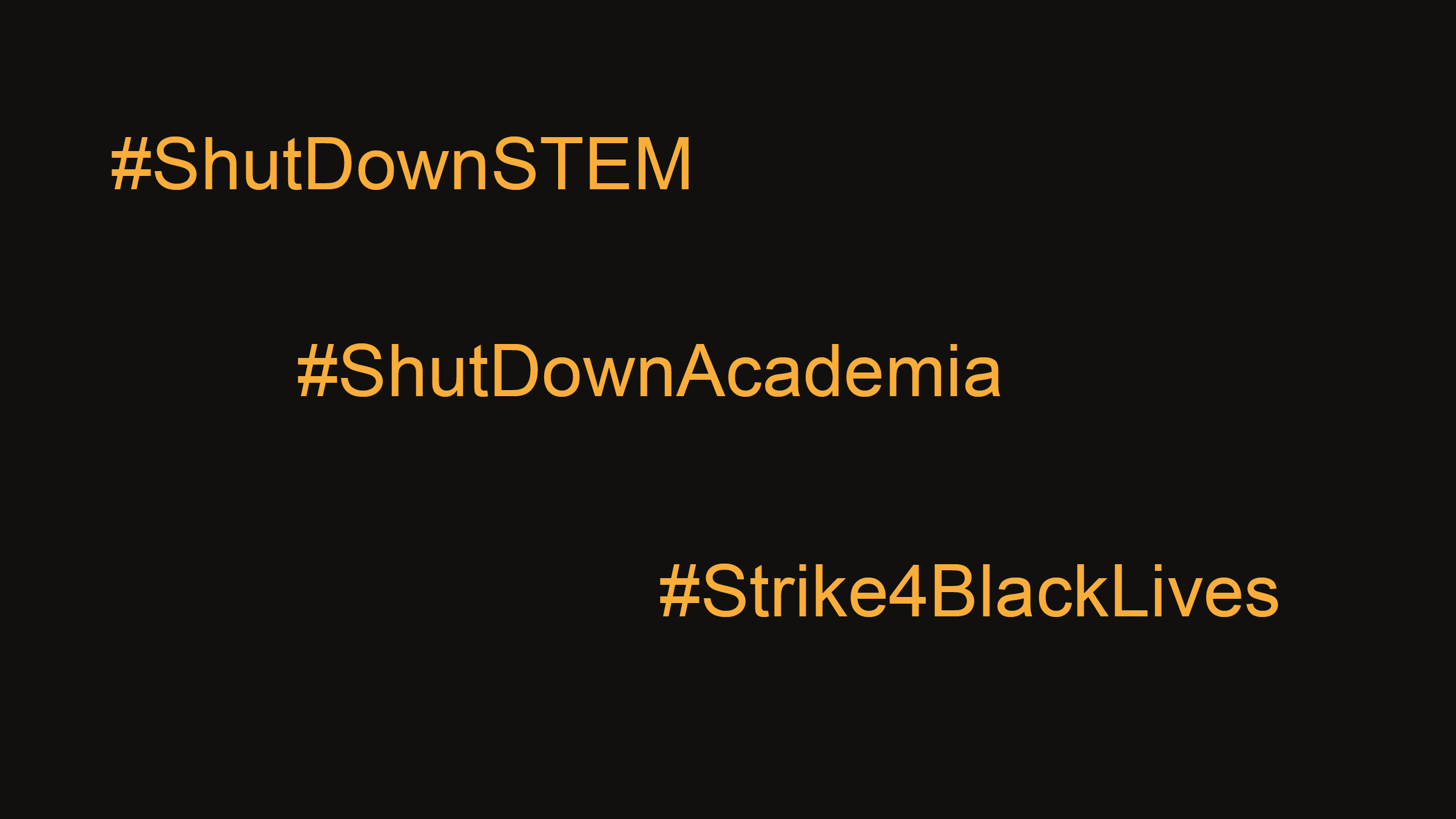 Here's how Live Science will participate today in #ShutDownSTEM and what it means to the site and staff.
 Global
 Great Britain
 Indian
 South Africa