Science News
 American
Science News for 10 June 2020
American
Science News for 10 June 2020
How South America became the new centre of the coronavirus pandemic
New Scientist - 10 Jun 2020 13:40
Coronavirus cases are rising sharply in South America, made worse by inequality, economic instability and the actions of Brazil's president Jair Bolsonaro
Theon-Kepler bifocal telescope helps advance radial-shearing interferometry
Phys.org - 10 Jun 2020 16:06 Recently, researchers at Shanghai Institute of Optics and Fine Mechanics of the Chinese Academy of Sciences have proposed a new kind of telescope structure, a Theon-Kepler bifocal telescope, to realize radial-shearing in...
Skoltech researchers use machine learning to aid oil production
EurekAlert! - 10 Jun 2020 06:00
(Skolkovo Institute of Science and Technology (Skoltech)) Skoltech scientists and their industry colleagues have found a way to use machine learning to accurately predict rock thermal conductivity, a crucial parameter fo...
New genetic defect linked to ALS
Science Daily - 10 Jun 2020 22:04
Researchers have identified how certain gene mutations cause amyotrophic lateral sclerosis (ALS), also known as Lou Gehrig's disease. The pathway identified by the researchers may also be responsible for a certain form o...
Newly synthesized fungal compound can switch on a self-destruct button for cancer
Science Daily - 10 Jun 2020 19:51
Cancers cells use a special technique to propagate; they delete their 'programmed death' gene through mutation, 'forget' to die when their lifetime is over, and continue to grow instead. A research team has developed a m...
Can gut microbiome alter drug safety and efficacy?
Science Daily - 10 Jun 2020 19:50
Researchers have developed an approach for studying how the gut microbiome chemically alters oral medications, unlocking possibilities for improving efficacy, reducing side effects, and creating drugs personalized to an ...
Potential treatment for Rett Syndrome
Science Daily - 10 Jun 2020 19:50
An experimental cancer drug can extend the life of mice with Rett Syndrome, a devastating genetic disorder that afflicts about one of every 10,000 to 15,000 girls within 6 to 18 months after birth.
Kissing bugs also find suitable climatic conditions in Europe
Science Daily - 10 Jun 2020 19:50
An infection with Chagas disease is only possible in Latin America since the insect species that spread the disease only occur there. Scientists have now used ecological niche models to calculate the extent to which habi...
Mozart may reduce seizure frequency in people with epilepsy
Science Daily - 10 Jun 2020 19:50
A new clinical research study has found that a Mozart composition may reduce seizure frequency in patients with epilepsy.
What makes a giant jellyfish's sting deadly?
Science Daily - 10 Jun 2020 18:09
With summer on the way, and some beaches reopening after COVID-19 shutdowns, people will be taking to the ocean to cool off on a hot day. But those unlucky enough to encounter the giant jellyfish Nemopilema nomurai (also...
Considering health when switching to cleaner electricity
Science Daily - 10 Jun 2020 18:09
Power plants that burn coal and other fossil fuels emit not only planet-warming carbon dioxide, but also pollutants linked to breathing problems and premature death. Policies proposed to mitigate climate change, however,...
Simulations on biologically relevant time scales
Science Daily - 10 Jun 2020 17:20
Researchers deliver new insights into molecular mechanisms relevant for drug development.
Cellular stress causes cancer cell chemoresistance
Science Daily - 10 Jun 2020 17:20
Resistance of cancer cells against therapeutic agents is a major cause of treatment failure, especially in recurrent diseases. An international team has now identified a novel mechanism of chemoresistance.
A good vitamin D status can protect against cancer
Science Daily - 10 Jun 2020 16:27
A good vitamin D status is beneficial both in cancer prevention and in the prognosis of several cancers, according to a new research review. The anti-cancer effects of vitamin D are especially pronounced in the preventio...
World's first spherical artificial eye has 3D retina
Science Daily - 10 Jun 2020 16:27
Scientists have developed the world's first 3D artificial eye with capabilities better than existing bionic eyes and in some cases, even exceed those of the human eyes, bringing vision to humanoid robots and new hope to ...
Speed of space storms key to protecting astronauts and satellites from radiation
Science Daily - 10 Jun 2020 15:40
Measuring the speed of coronal mass ejections (CMEs) as they erupt from the sun, in addition to their size, found to be crucial in providing accurate early warnings that keep astronauts and technology safe.
Different hormone therapies affect brain function differently
Science Daily - 10 Jun 2020 15:40
Sex hormones influence the structure and function of the brain, but little is known about the effect of hormone therapies (HT) on changes in the brain during menopause. A new study shows smaller increases in structural b...
New imaging method tracks brain's elusive networks
Neuroscience News - 10 Jun 2020 23:46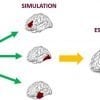 A new system for high-density EEG helps with the imaging of the origin and path of both normal and abnormal neural activity.
Will lockdown loneliness make us loners?
Neuroscience News - 10 Jun 2020 23:27 Social preference in isolated zebrafish is caused by stress and anxiety, not observed anti-social patterns.
New genetic defect linked to ALS
Neuroscience News - 10 Jun 2020 23:09 Researchers have identified how specific genetic mutations cause ALS. The pathway, they believe, may also be responsible for the development of frontotemporal dementia.
Researchers forecast stable, slightly declining levels of COVID-19 entering fall
Neuroscience News - 10 Jun 2020 21:11 New coronavirus model finds case spread is concave, meaning the impact of one more infected person diminishes as more people become infected.
An artist carved this tiny bird sculpture 13,000 years ago in China
New Scientist - 10 Jun 2020 21:00
A carving of a bird less than 2 centimetres long was probably shaped 13,000 years ago, making it one of the oldest known sculptures discovered in China
 Global
 Great Britain
 Indian
 South Africa