Science News
 American
Science News for 15 June 2020
American
Science News for 15 June 2020
Einstein's core idea about gravity just passed an extreme, whirling test in deep space
Live Science - 15 Jun 2020 15:31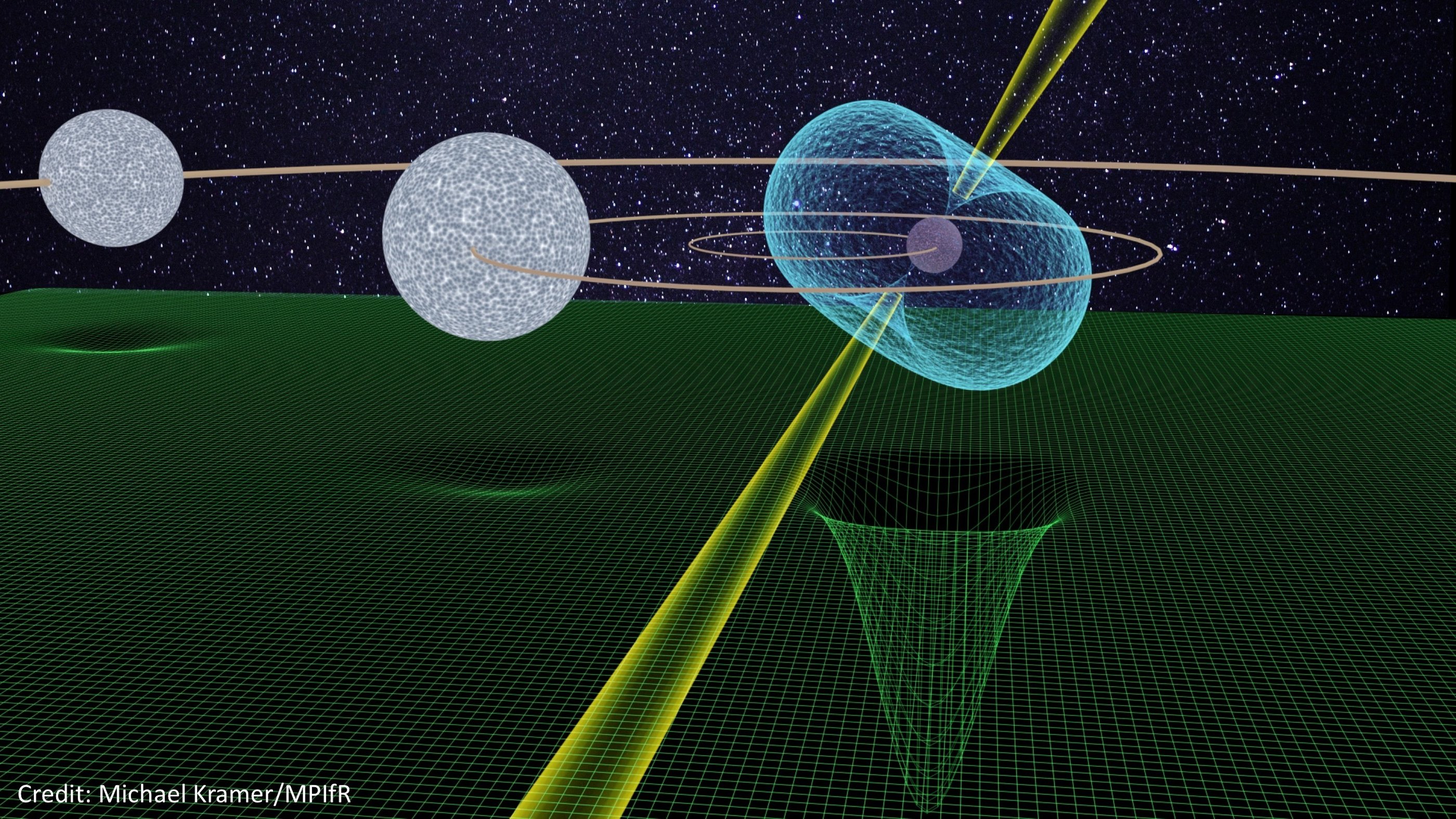 Once again, physicists have confirmed one of Albert Einstein's core ideas about gravity and relativity -- this time with the help of a neutron star flashing across space.
A quantum memory that operates at telecom wavelengths
Phys.org - 15 Jun 2020 15:30 To create large quantum networks, researchers will first need to develop efficient quantum repeaters. A key component of these repeaters are quantum memories, which are the quantum-mechanical equivalents of more conventi...
SpaceX's predawn Starlink satellite launch looks simply stunning in these Twitter photos
Live Science - 15 Jun 2020 15:18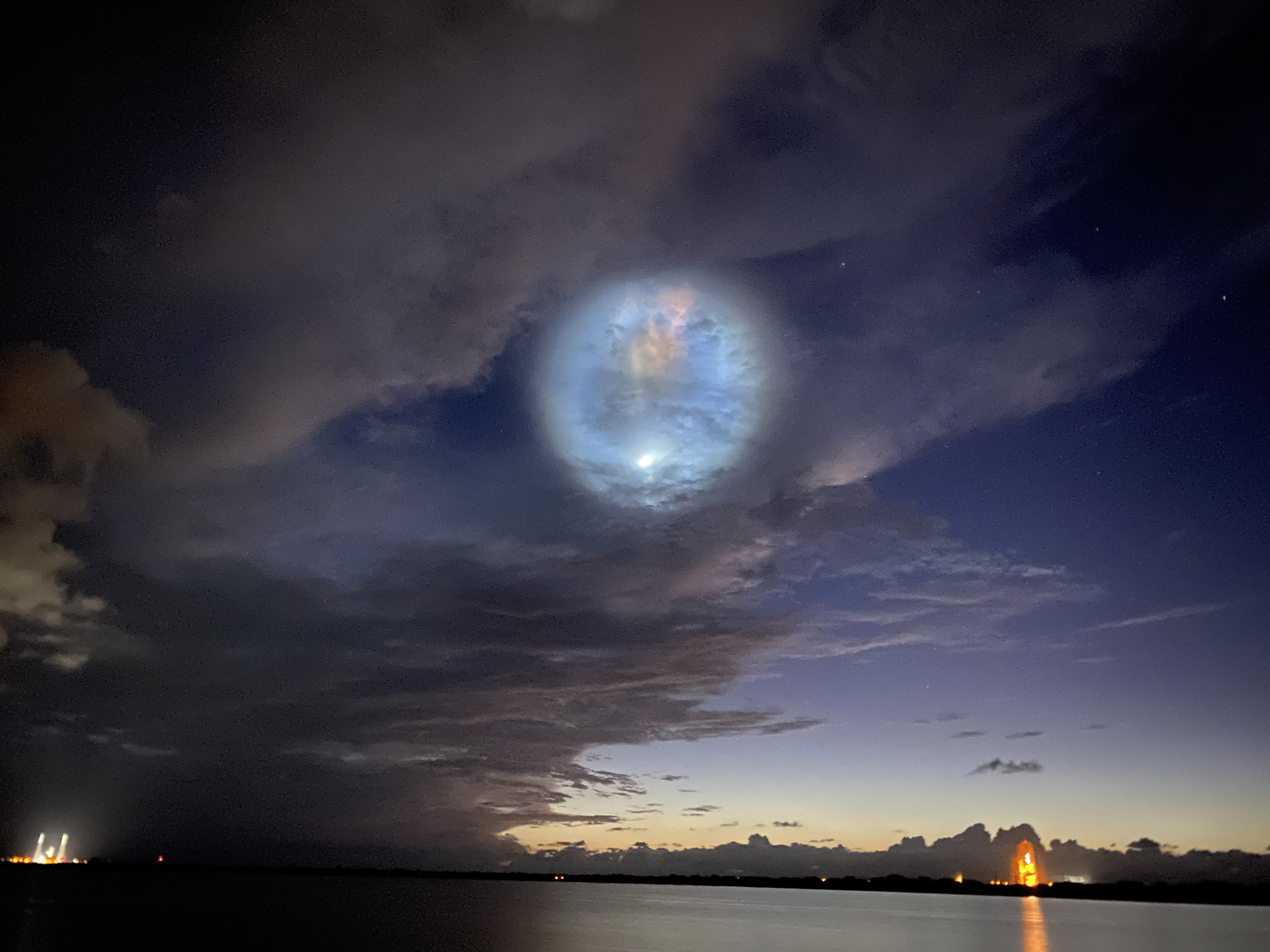 When SpaceX launched a Falcon 9 rocket into space Saturday (June 13), it delivered 58 Starlink satellites and three Planet SkySats into orbit. It also looked amazing.
New study reveals racial disparities in fear of police brutality
Neuroscience News - 15 Jun 2020 23:13 A new study reveals blacks are five times more likely, and Latinos four times more likely, to fear police brutality than whites. The fear of experiencing police brutality by minorities also exacts an emotional toll that ...
Birds and other animals may see colours that we cannot even imagine
New Scientist - 15 Jun 2020 22:00
Experiments with wild hummingbirds suggest that they perceive four so-called non-spectral colours that the cells in our eyes make it impossible for us to see
Brothers in arms: The brain and its blood vessels
Neuroscience News - 15 Jun 2020 21:42 Blood vessels can sense the metabolic state of nearby neurons. An imbalance of fatty acids is sensed by neural blood vessels, stimulating them to mount a stress response by loosening the blood-brain barrier. If the imbal...
Neurons can shift how they process information about motion
Neuroscience News - 15 Jun 2020 21:20 When it comes to processing information about motion, neurons in the ventral intraparietal area of the brain are more flexible in switching between reference frames. The findings could be used to develop neural prostheti...
Disrupted circadian rhythms linked to later Parkinson's diagnoses
Neuroscience News - 15 Jun 2020 21:03 Circadian rhythm disruptions in older men have been linked to an increased risk of developing Parkinson's disease. The findings suggest circadian disruptions may reflect the neurodegenerative processes already affecting ...
Researchers create first room-temp 'magnon switch' with industrially useful properties
Phys.org - 15 Jun 2020 20:44 Scientists at the National Institute of Standards and Technology (NIST) and the Massachusetts Institute of Technology (MIT) have demonstrated a potentially new way to make switches inside a computer's processing chips, e...
New indication of a link between Alzheimer's and diabetes
Neuroscience News - 15 Jun 2020 19:57 A new high-resolution 3D model reveals strong similarities in fibril structures associated with Alzheimer's and type 2 diabetes.
An AI can generate photographs of people's faces from line drawings
New Scientist - 15 Jun 2020 19:44
An algorithm that can turn line sketches of people's faces into realistic photographs could rapidly generate images of suspects in criminal investigations
Loneliness alters your brain's social network
Neuroscience News - 15 Jun 2020 19:42 Loneliness alters how the brain represents relationships, a new study reports.
Covid-19 news: New coronavirus outbreak linked to market in Beijing
New Scientist - 15 Jun 2020 19:30
The latest coronavirus news updated every day including coronavirus cases, the latest news, features and interviews from New Scientist and essential information about the covid-19 pandemic
Why pulsars shine bright: A half-century-old mystery solved
Phys.org - 15 Jun 2020 19:09 When Jocelyn Bell first observed the emissions of a pulsar in 1967, the rhythmic pulses of radio waves so confounded astronomers that they considered whether the light could be signals sent by an alien civilization.
Excitons form superfluid in certain 2-D combos
Phys.org - 15 Jun 2020 18:53 Mixing and matching computational models of 2-D materials led scientists at Rice University to the realization that excitons--quasiparticles that exist when electrons and holes briefly bind--can be manipulated in new and...
Radiation pressure with recoil: Experimental proof for a 90 year-old theory
Phys.org - 15 Jun 2020 18:52 Light exerts a certain amount of pressure onto a body: sun sails could thus power space probes in the future. However, when light particles (photons) hit an individual molecule and knock out an electron, the molecule fli...
Research reveals how material defects influence melting process
Phys.org - 15 Jun 2020 18:47 In 1972, physicists J. Michael Kosterlitz and David Thouless published a groundbreaking theory of how phase changes could occur in two-dimensional materials. Experiments soon showed that the theory correctly captured the...
Elasticity key to plants and animals' ability to sting
Phys.org - 15 Jun 2020 18:43 A new study explains for the very first time the principles behind the design of stings, needles, and spikes in animals and plants. The principles can be directly used in the development of new tools and medical equipmen...
We can make robots from gelatine and other edible ingredients
New Scientist - 15 Jun 2020 18:00
Soft, edible and biodegradable robots made from gelatine could be used to deliver drugs to animals or make safer children's toys
China's quantum satellite helps send secure messages over 1200km
New Scientist - 15 Jun 2020 18:00
Quantum communication using entangled particles is essentially unhackable, and now it has been extended to the longest distance ever, about 1200 kilometres
China Takes Another Step Towards Uncrackable Quantum Communication
Singularity Hub - 15 Jun 2020 17:01 Uncrackable quantum communication is a step closer after Chinese researchers demonstrated a practical way to share security keys over 1,120 kilometers using entangled photons sent and received by satellites. In 2017, a t...
Probing dark matter with the Higgs boson
Phys.org - 15 Jun 2020 15:21 Visible matter--everything from pollen to stars and galaxies--accounts for roughly 15% of the total mass of the universe. The remaining 85% is made of something entirely different from things we can touch and see: dark m...
 Global
 Great Britain
 Indian
 South Africa