Science News
 American
Science News for 23 July 2020
American
Science News for 23 July 2020
How COVID-19 Decreases Weather Forecast Accuracy
Scientific American - 23 Jul 2020 23:43Does your blood type influence how susceptible you are to covid-19?
New Scientist - 23 Jul 2020 19:51
There is some evidence that blood types can influence whether or not someone becomes infected with the coronavirus, as they do with SARS, but it is not yet conclusive
Quantum physicists crack mystery of 'strange metals,' a new state of matter
Phys.org - 23 Jul 2020 17:26 Even by the standards of quantum physicists, strange metals are just plain odd. The materials are related to high-temperature superconductors and have surprising connections to the properties of black holes. Electrons in...
Advanced Photon Source upgrade will transform the world of scientific research
Phys.org - 23 Jul 2020 15:35 From chemistry to materials science to COVID-19 research, the APS is one of the most productive X-ray light sources in the world. An upgrade will make it a global leader among the next generation of light sources, openin...
Silicon core fishbone waveguide extends frequency comb
Phys.org - 23 Jul 2020 22:06 Frequency combs are becoming one of the great enabling technologies of the 21st century. High-precision atomic clocks, and high-precision spectroscopy are just two technologies that have benefited from the development of...
Russia just tested anti-satellite space weapon, US claims
Live Science - 23 Jul 2020 21:19 The U.S. government says Russia tested an anti-satellite space weapon July 15. Russia says it was an inspector satellite. Nothing was destroyed.
Seeing the light: Researchers combine technologies for better light control
Phys.org - 23 Jul 2020 19:15 A new technology that can allow for better light control without requiring large, difficult-to-integrate materials and structures has been developed by Penn State researchers. The new photonic integrated chip could allow...
How the slave trade left its mark in the DNA of people in the Americas
New Scientist - 23 Jul 2020 18:00
Genetic data from people in the Americas with African heritage hints at unusually high death rates among certain slaves, and points to systematic rape of women of African descent
A new method to significantly increase the range and stability of optical tweezers
Phys.org - 23 Jul 2020 16:37 Optical tweezers are a device which uses a laser beam to move micron-sized objects such as living cells, proteins, and molecules. In 2018, the American physicist Arthur Eshkin received the Nobel Prize for this technology...
Antibiotics Disrupt Development of the 'Social Brain' in Mice
Neuroscience News - 23 Jul 2020 21:49
Early-life exposure to antibiotics may impact brain signaling pathways associated with social behavior and pain regulation. Young mice treated with antibiotics had reduced expression of receptors that mediate endorphin, ...
Hummingbird-size dinosaur may actually be a lizard
Live Science - 23 Jul 2020 17:15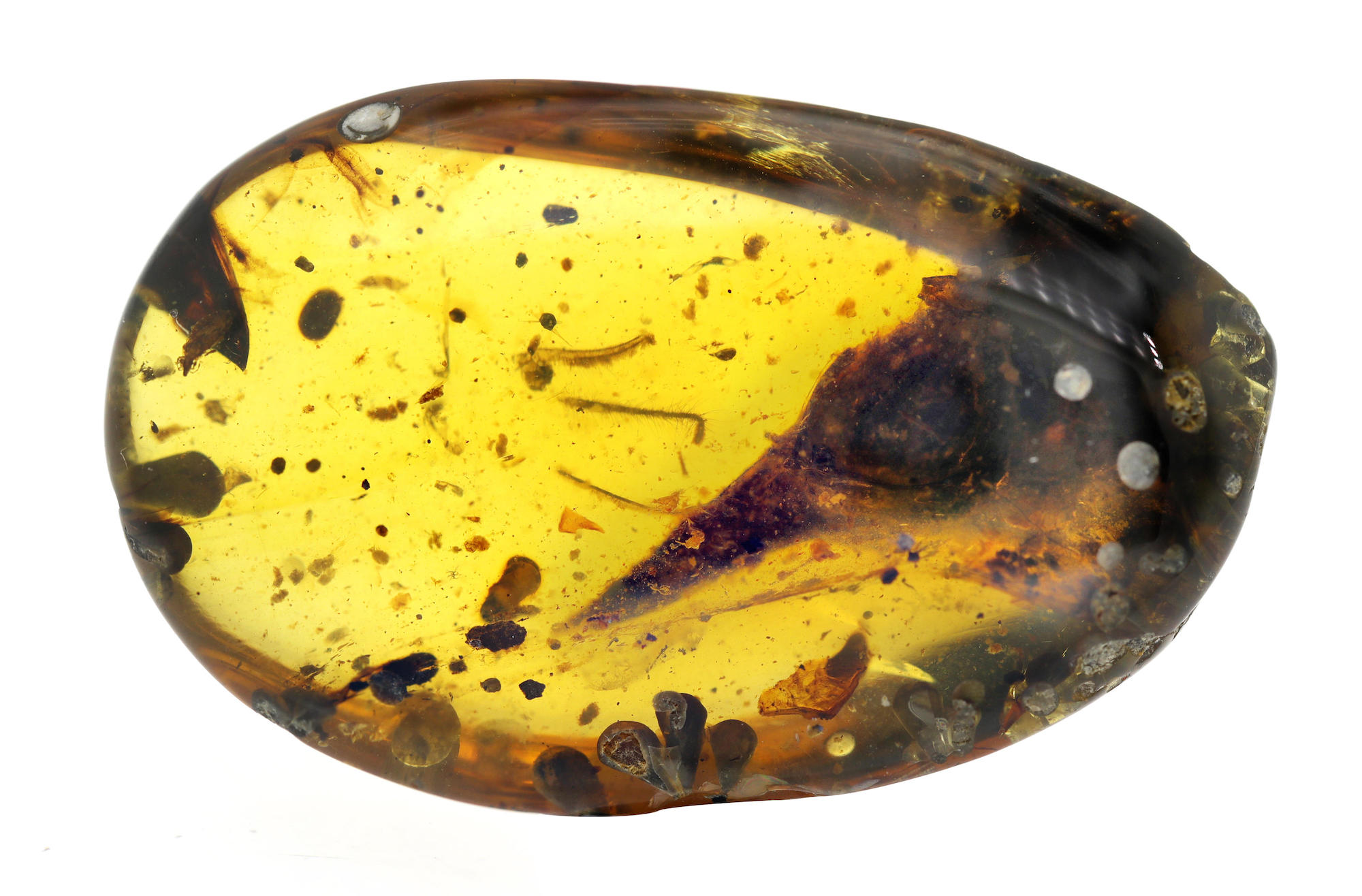 A teensy "dinosaur" head found in amber might actually belong to an ancient lizard.
Near-field light research advances particle manipulation, high resolution microscopy, and more
Phys.org - 23 Jul 2020 21:57 There are many types of light--some visible and some invisible to the human eye. For example, our eyes and brain don't have the tools to process ultraviolet light when it hits our eyes, making it invisible. But there is ...
DNA from Viking people reveals the unexpected history of smallpox
New Scientist - 23 Jul 2020 21:00
Smallpox DNA found in the bodies of people who lived in the Viking era show that these viruses were different to the one eliminated in the 20th century - and perhaps much less deadly
Neanderthals May Have Had a Lower Threshold for Pain
Neuroscience News - 23 Jul 2020 23:11
Genomic research finds those who inherited a special ion channel from Neanderthals experience more pain.
Age Differences in How the Brain Perceives and Remembers
Neuroscience News - 23 Jul 2020 22:16
Scene selective cortical regions are more sensitive to age than face-selective regions when it comes to memory and perception.
First underwater methane leak discovered near Antarctica
Live Science - 23 Jul 2020 22:07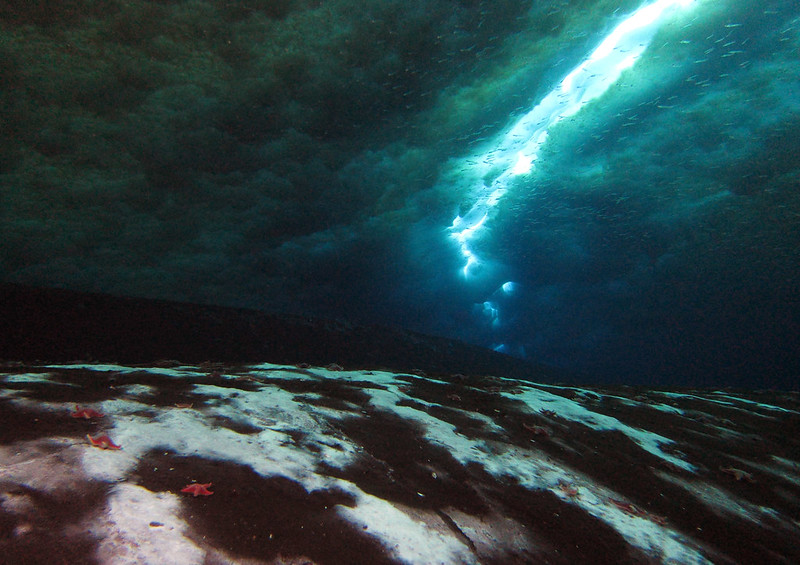 Researchers detected the first underwater methane leak in Antarctica, and the microbes responsible for eating it aren't doing their job.
Earth faces plastic pollution disaster unless we take drastic action
New Scientist - 23 Jul 2020 21:00
Even if we took every feasible action to reduce plastic pollution, we would only cut it by 78 per cent by 2040, a study has found. That doesn't mean we should stop trying
Big drop in Earth's surface vibrations seen during covid-19 lockdowns
New Scientist - 23 Jul 2020 21:00
Earthquake monitoring stations have detected sharp reductions in Earth's surface vibrations during coronavirus lockdowns due to limits on noisy human activities
Mysterious Brain Structure Sheds Light on Addiction
Neuroscience News - 23 Jul 2020 20:33
A new study reveals the role the claustrum plays in cocaine addiction. Inhibiting claustral neurons prevented behavioral responses to cocaine in mouse models of addiction.
Argonne breaks ground on new state-of-the-art beamlines for the Advanced Photon Source
Phys.org - 23 Jul 2020 19:23 The two new beamlines will be constructed as part of a comprehensive upgrade of the APS, enhancing its capabilities and maintaining its status as a world-leading facility for X-ray science.
Night lights cause severe loss of sleep for pigeons and magpies
New Scientist - 23 Jul 2020 18:00
City lights could have a serious impact on the sleep patterns of birds, as pigeons were found to sleep around 4 hours less under illumination equivalent to street lights
Physicists develop technology to transform information from microwaves to optical light
Phys.org - 23 Jul 2020 14:40 Physicists at the University of Alberta have developed technology that can translate data from microwaves to optical light--an advance that has promising applications in the next generation of super-fast quantum computer...
 Global
 Great Britain
 Indian
 South Africa