Science News
 American
Science News for 29 October 2020
American
Science News for 29 October 2020
Japan's KAGRA searches the sky for gravitational waves
Symmetry Magazine - 29 Oct 2020 15:42 The newly operational KAGRA will bump the number of gravitational-wave observatories to four, which will allow scientists to better triangulate the source of ripples in space-time. Deep underground, below a mountain and ...
Genomic study reveals role for hypothalamus in inflammatory bowel disease
Science Daily - 29 Oct 2020 17:58
Using sophisticated 3D genomic mapping and integrating with public data resulting from genome-wide association studies (GWAS), researchers have found significant genetic correlations between inflammatory bowel disease (I...
Studies Link Some Autism to Brain Cells That Guide Sociability and Platonic Love
Neuroscience News - 29 Oct 2020 21:57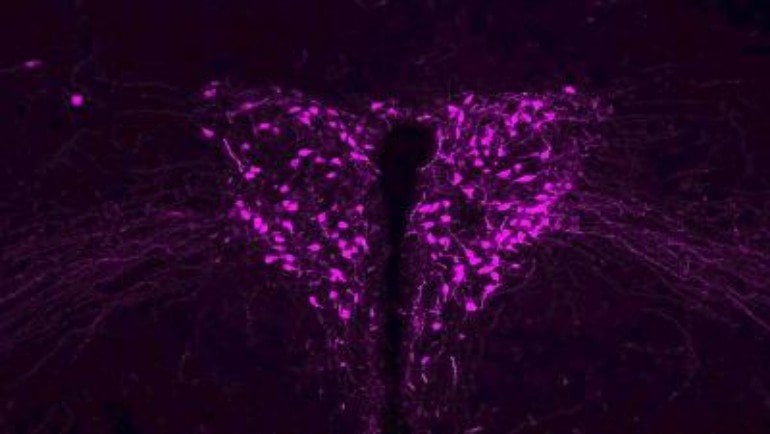 Mouse study links specific autism types to abnormal parvocellular oxytocin neurons in the hypothalamus.
Brainstem Neurons Control Both Behavior and Misbehavior
Neuroscience News - 29 Oct 2020 21:29 Study reveals how gene control mechanisms determine the identity of neurons in the embryonic brainstem. A failure in differentiation in developing brainstem neurons can lead to behavioral abnormalities, including ADHD.
Rare full moon on Halloween will be seen across the US for the first time in 76 years
Live Science - 29 Oct 2020 21:11 Don't miss the rare appearance of a full moon on Halloween, something that hasn't been seen across the US since 1944.
Density fluctuations in amorphous silicon discovered
Phys.org - 29 Oct 2020 20:40 For the first time, a team at HZB has identified the atomic substructure of amorphous silicon with a resolution of 0.8 nanometres using X-ray and neutron scattering at BESSY II and BER II. Such a-Si:H thin films have bee...
Man almost dies from an allergic reaction to cold air
Live Science - 29 Oct 2020 20:39 The condition, known as cold urticaria, is fairly rare and can cause anaphylaxis.
Assessing the viability of small modular nuclear reactors
Phys.org - 29 Oct 2020 19:14 Small modular nuclear reactors could provide nuclear power to small communities and rural areas currently served by environmentally damaging fossil fuel energy-sources. Assessing the potential of these reactors means kee...
Covid-19 news: Cases in England estimated to be rising by 96,000 a day
New Scientist - 29 Oct 2020 19:06
The latest coronavirus news updated every day including coronavirus cases, the latest news, features and interviews from New Scientist and essential information about the covid-19 pandemic
World's record entanglement storage sets up a milestone for Quantum Internet Alliance
Phys.org - 29 Oct 2020 19:05 Researchers from Sorbonne University in Paris have achieved a highly efficient transfer of quantum entanglement into and out of two quantum memory devices. This achievement brings a key ingredient for the scalability of ...
Scientists launch quest to develop quantum sensors for probing quantum materials
Phys.org - 29 Oct 2020 18:56 When it comes to fully understanding the hidden secrets of quantum materials, it takes one to know one, scientists say: Only tools that also operate on quantum principles can get us there.
UK's spherical nuclear fusion reactor tests new heat-reducing exhaust
New Scientist - 29 Oct 2020 18:09
Researchers have successfully tested a new £55 million nuclear fusion machine in the UK which could help tackle problems caused by the super high temperatures involved in fusion reactions
Identifying biomolecule fragments in ionising radiation
Phys.org - 29 Oct 2020 17:50 When living cells are bombarded with fast, heavy ions, their interactions with water molecules can produce randomly scattered 'secondary' electrons with a wide range of energies. These electrons can then go on to trigger...
Octopuses taste their food when they touch it with their arms
New Scientist - 29 Oct 2020 17:00
Octopuses use their arms to 'lick' prey - which researchers say adds to evidence that the cephalopods' eight appendages are analogous to tongues with 'hands' and 'brains'
Look Ma, no ears! Teensy spiders hear with organ on their legs
Live Science - 29 Oct 2020 17:00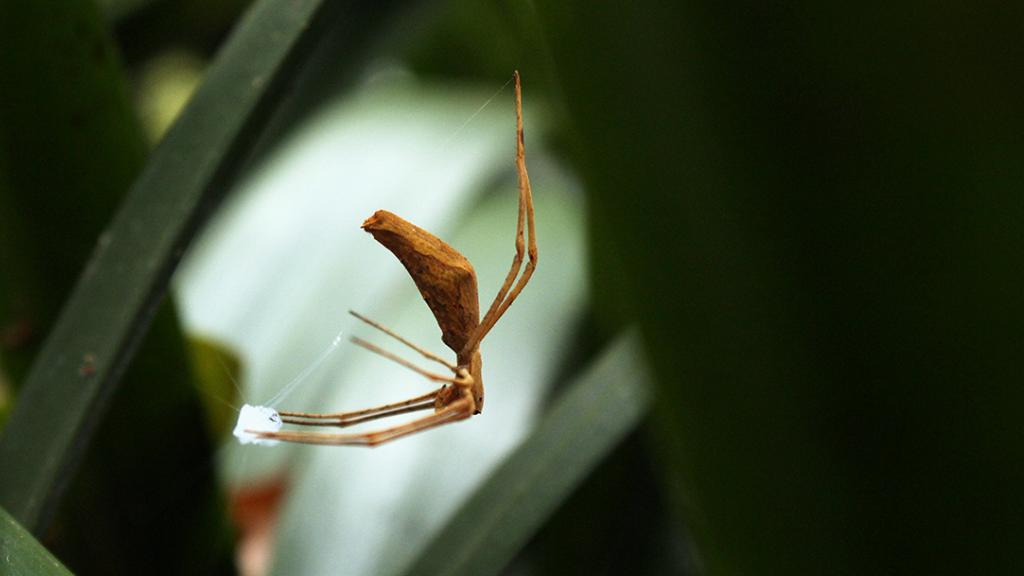 Though known for their huge eyes, ogre-faced spiders also "listen" for their prey.
Spider listens with its legs to grab flying insects out of the air
New Scientist - 29 Oct 2020 17:00
The ogre-faced spider catches flying insects in a web-like net without being able to see them - we now know it is because the spider can hear them with its legs
Racist physicist sneers at Einstein and Jews in a 1927 anti-Semitic letter up for auction
Live Science - 29 Oct 2020 16:53 An anti-Semitic letter penned in 1927 by a German physicist shows racist views toward Albert Einstein and Jews in academia.
An Earth-size planet is careening untethered through the galaxy, scientists find
Live Science - 29 Oct 2020 16:46 'Rogue' planets are worlds without suns. Astronomers have discovered one the size of Earth for the first time ever.
Researchers find direction decided by rate of coin flip in quantum world
Phys.org - 29 Oct 2020 16:32 Flip a coin. Heads? Take a step to the left. Tails? Take a step to the right. In the quantum world? Go in both directions at once, like a wave spreading out. Called the 'walker analogy,' this random process can be applie...
The World's First Commercial Flying Car Is Hitting Roads in Holland
Singularity Hub - 29 Oct 2020 16:00 We've all had the experience of sitting in bumper-to-bumper traffic with nothing but miles of red taillights ahead, wishing we could somehow break away from the pack and zoom off to our destination traffic-free. Now driv...
Controlling deforestation and wildlife trade could prevent pandemics
New Scientist - 29 Oct 2020 16:00
Diseases like covid-19 come from wild animals, so reducing unsustainable practices like deforestation could stop future outbreaks from happening, according to a global biodiversity report
Building blocks of language evolved before humans split from chimps and monkeys
Live Science - 29 Oct 2020 15:51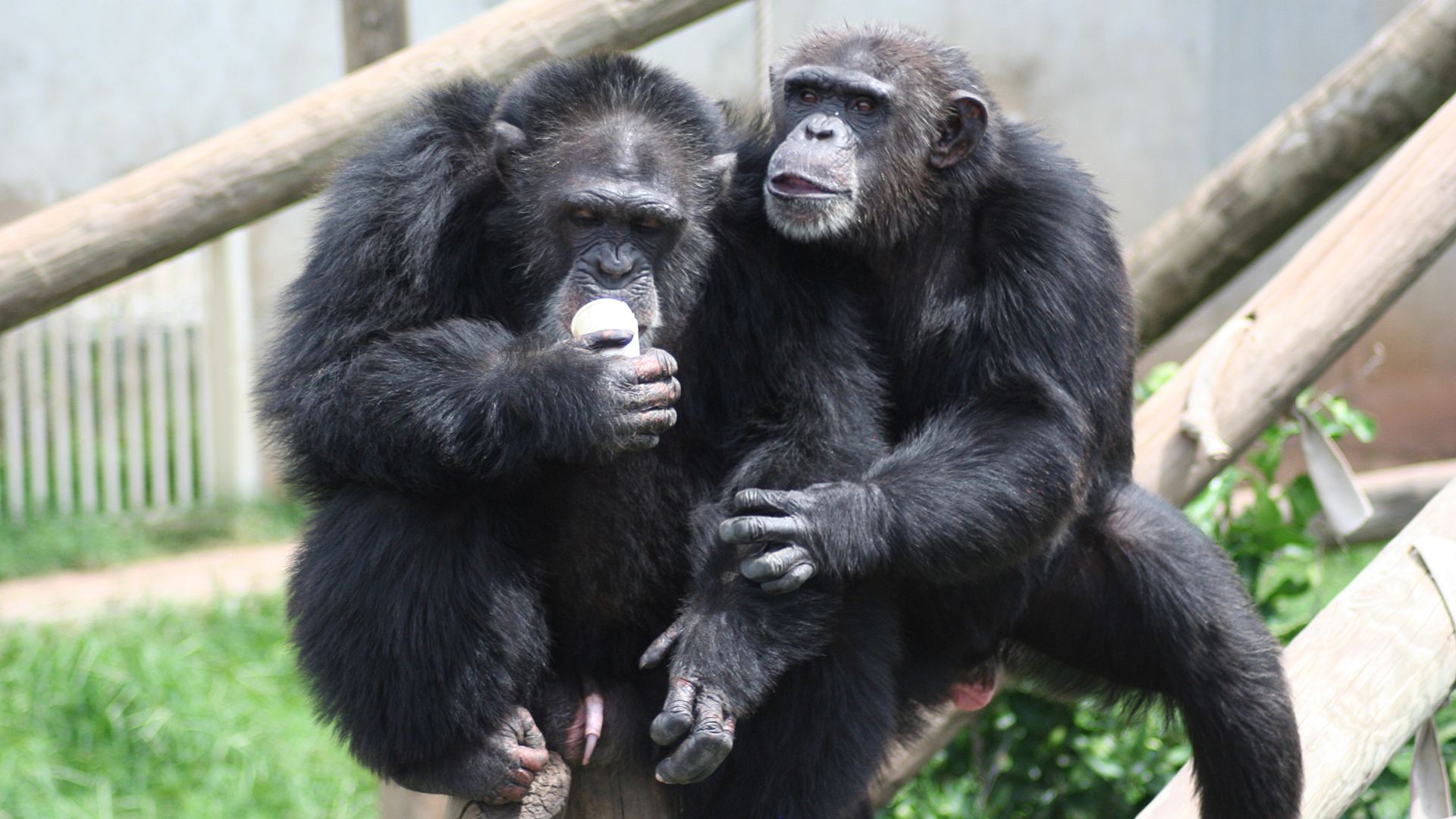 The ability to understand how groups of words relate to each other is foundational to language, and dates to an ancestor we shared with primate relatives at least 40 million years ago.
 Global
 Great Britain
 Indian
 South Africa