Science News
 American
Science News for 9 September 2021
American
Science News for 9 September 2021
How do cats get their stripes?
Live Science - 9 Sep 2021 13:00 Several key genes dictate whether a house cat will have stripes, spots or neither.
Magnet milestones move distant nuclear fusion dream closer
Phys.org - 9 Sep 2021 11:29 Teams working on two continents have marked similar milestones in their respective efforts to tap an energy source key to the fight against climate change: They've each produced very impressive magnets.
Smoke sets off alarms on the International Space Station
Live Science - 9 Sep 2021 19:49 Alarms blared aboard the Russian side of the International Space Station (ISS) early Thursday (Sept. 9), and the crew reported seeing smoke and smelling burnt plastic, according to news reports.
Too Much Free Time May Be Almost as Bad as Too Little
Neuroscience News - 9 Sep 2021 23:59 Having too much free time can be almost as bad for your overall wellbeing as having little or no time to yourself, researchers report.
Reversal of the Biological Hallmarks Responsible for Development of Alzheimer's Disease and Dementia Using Unique Hyperbaric Oxygen Therapy Protocol
Neuroscience News - 9 Sep 2021 23:35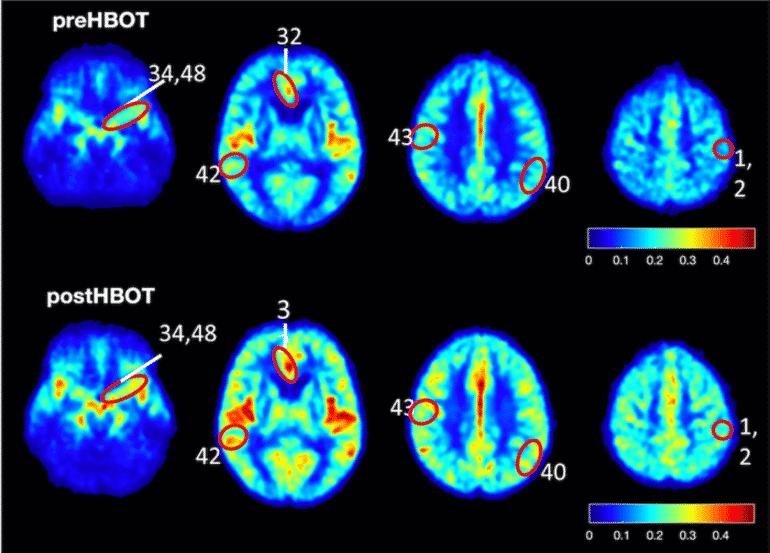 Hyperbaric oxygen therapy improved cerebral blood flow by up to 23%, alleviating vascular dysfunction and amyloid burden in elderly patients. The treatment also improved memory by 16.5%.
Eyeglasses for School Kids Boosts Academic Performance
Neuroscience News - 9 Sep 2021 23:08 Providing free or low-cost vision care and eyeglasses to children helped improve academic performance and behavior, researchers report.
A glimpse at Greenland's deep-sea ecosystems threatened by fishing
New Scientist - 9 Sep 2021 23:06 Halibut fishing off the coast of Greenland uses heavy equipment dragged along the sea floor, which can cause irreversible harm to slow-growing anemones and coral
Iron Supplements Not Linked to Cognitive Improvements for Kids
Neuroscience News - 9 Sep 2021 22:35 While iron supplements help improve symptoms of anemia in young children, they have no impact on growth, cognitive function, behavior or development.
Childhood Gender Nonconformity in Boys Linked to Early Androgens
Neuroscience News - 9 Sep 2021 22:18 Male children with isolated GnRH deficiency (IGD), a rare endocrine disorder associated with a lack of sex hormone during the second trimester of development, report more gender non-conformity than males without IGD. The...
Socializing May Improve Older Adults' Cognitive Function in Daily Life
Neuroscience News - 9 Sep 2021 21:47 Older adults who frequently connect with friends and others in social situations perform better on cognitive function tests than those who are not so social.
Eating Peanuts May Lower Risk of Ischemic Stroke and Cardiovascular Disease
Neuroscience News - 9 Sep 2021 21:19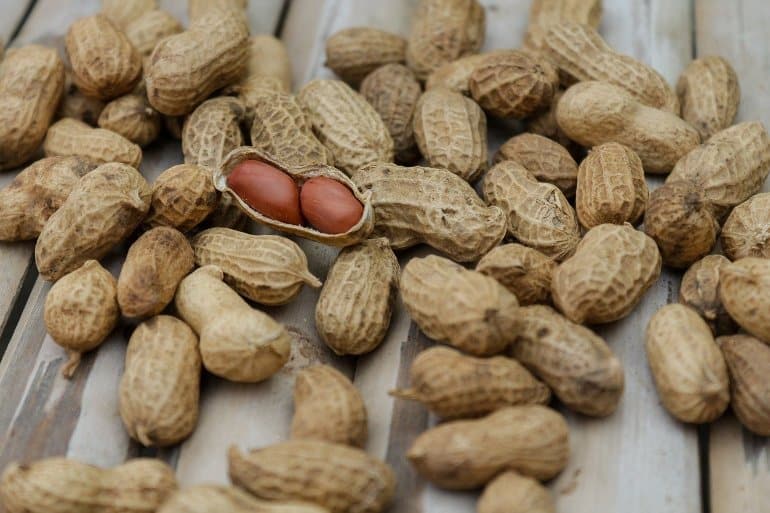 A study conducted on Japanese men and women found peanut consumption decreased the risk of cardiovascular disease and ischemic stroke.
Tyrannosaurs bit each other's faces in dino fight clubs
Live Science - 9 Sep 2021 21:12 Tyrannosaurs around the age of sexual maturity often bit each other's faces, likely to win prizes.
Unprecedented plasma lensing for high-intensity lasers
Phys.org - 9 Sep 2021 20:47 High-power laser pulses focused to small spots to reach incredible intensities enable a variety of applications, ranging from scientific research to industry and medicine. At the Berkeley Lab Laser Accelerator (BELLA) Ce...
Researchers use the S-matrix bootstrap to examine whether string theory is the only consistent theory of quantum gravity
Phys.org - 9 Sep 2021 20:20 The S-matrix bootstrap is a numerical method that can be used to determine or constrain the scattering amplitudes of particles in quantum field theory using simple principles. Over the past few decades, some physicists h...
Link Between ADHD and Dementia Across Generations
Neuroscience News - 9 Sep 2021 20:19 People with ADHD had a 34% higher risk of developing dementia than those without the disorder. The risk of being diagnosed with Alzheimer's, the most common type of dementia, was 55% higher for those with ADHD.
Food science meets cell science in bid to explain inner workings of membrane-free cell compartments
Science Daily - 9 Sep 2021 20:12
Researchers report that food science principles have helped them determine how unusual droplets within cells stay organized and avoid dissolving into the rest of the cell's gelatinous interior.
Preventing the long-term effects of traumatic brain injury
Science Daily - 9 Sep 2021 20:12
Researchers have identified a specific molecule in a part of the brain called the thalamus that plays a key role in secondary effects of traumatic brain injury, such as sleep disruption, epileptic activity, and inflammat...
Groundbreaking technique yields important new details on silicon, subatomic particles and possible 'fifth force'
Phys.org - 9 Sep 2021 20:00 Using a groundbreaking new technique at the National Institute of Standards and Technology (NIST), an international collaboration led by NIST researchers has revealed previously unrecognized properties of technologically...
Exposure to Traffic Noise Linked to Higher Dementia Risk
Neuroscience News - 9 Sep 2021 19:54 Exposure to high levels of road and rail traffic noise over long periods of time is associated with a higher risk of developing Alzheimer's disease and other dementias.
The World's Largest Direct Air Capture Plant Is Now Pulling CO2 From the Air in Iceland
Singularity Hub - 9 Sep 2021 19:10 A little over four years ago, the world's first commercial plant for sucking carbon dioxide out of the air opened near Zurich, Switzerland. The plant was powered by a waste heat recovery facility, with giant fans pushing...
Enzyme could be major driver of preeclampsia
Science Daily - 9 Sep 2021 18:42
A new study indicates that an enzyme called protein phosphatase 2 (PP2A) appears to be a major driver of preeclampsia, a dangerous pregnancy complication characterized by the development of high blood pressure and excess...
Potential indicator for obesity risk detected during sleep
Science Daily - 9 Sep 2021 18:40
Researchers have shown that people with inflexible metabolisms burn less fat at night than those with flexible metabolism. The team measured the respiratory quotient throughout the night and found that despite equal ages...
 Global
 Great Britain
 Indian
 South Africa