Science News
 American
Science News for 4 October 2021
American
Science News for 4 October 2021
Nobel prize in medicine won by US scientists who unlocked the secrets of our sense of touch
Live Science - 4 Oct 2021 17:54
The research gave us a mechanistic insight into two of our most fundamental sensory experiences.
Gas-Related Intestinal Symptoms Affect Nearly All Adults and Are Associated With Psychological Distress
Neuroscience News - 4 Oct 2021 23:59 Gastrointestinal problems associated with gas symptoms are linked to poor quality of life, higher stress, and increases in anxiety and depression.
How Endocannabinoids Keep the Brain in Balance
Neuroscience News - 4 Oct 2021 23:41 Endocannabinoids actively balance neural connections, allowing cells to either activate or inhibit each other. The findings shed light on the role endocannabinoids play in learning and some psychiatric disorders.
Treating Severe Depression With On-Demand Brain Stimulation
Neuroscience News - 4 Oct 2021 23:23 A modified deep brain stimulation devise that delivers on-demand stimulation when it recognizes changes in brain patterns provides immediate and long-term relief for depression sufferers.
Earlier Onset of High Blood Pressure Affects Brain Structure and May Increase Dementia Risk
Neuroscience News - 4 Oct 2021 23:04 A new study reveals an association between high blood pressure in a person's thirties and forties to smaller brain size and an increased risk of developing dementia later in life.
Intestinal Drug Shown to Boost Memory and Cognition
Neuroscience News - 4 Oct 2021 22:44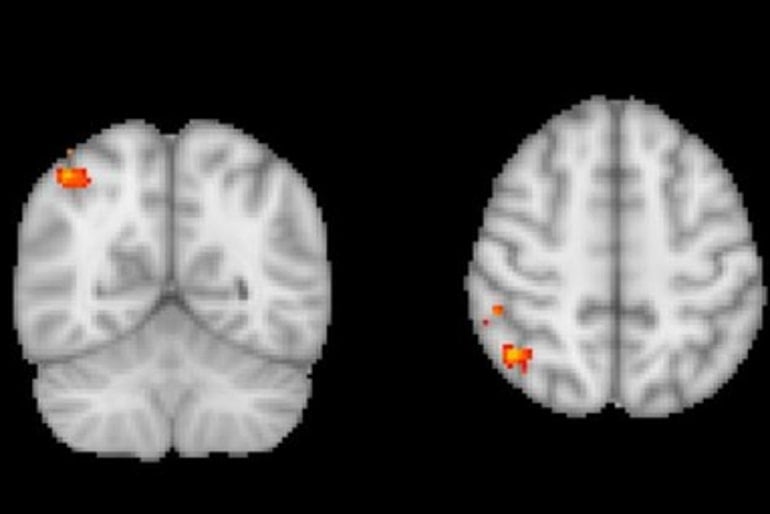 Prucalopride, a medication commonly prescribed to treat constipation, may help improve memory and cognition. People prescribed the drug for 6 days performed better in memory tests and had increased activity in brain area...
The First Neuroscience Evidence of Team Flow as a Unique Brain State
Neuroscience News - 4 Oct 2021 22:03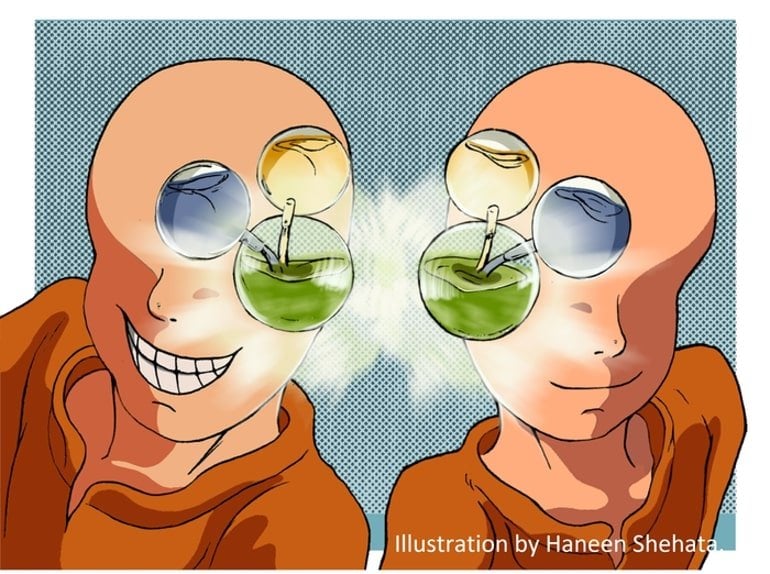 Researchers have identified the neural correlates of team flow, a state where members of a team get into "the zone" to accomplish a task. The finding could be used as a tool to predict and enhance team performance.
People in cities have faced huge increase in heat exposure since 1983
New Scientist - 4 Oct 2021 22:00 The world's city dwellers collectively experienced 119 billion days above 30°C in 2016 - a 199 per cent increase on the equivalent 1983 figure of 40 billion days
People reached remote Atlantic islands 700 years earlier than thought
New Scientist - 4 Oct 2021 22:00 The Azores, some 1400 kilometres off the west coast of Europe, were settled by the Portuguese in the 1400s, but now there's evidence people had lived there 700 years earlier
Cell 'quakes' may help cells respond to the outside world
Science Daily - 4 Oct 2021 21:37
New computer simulations reveal that sudden restructuring of the cytoskeleton, or scaffolding, inside animal cells is caused by the slow buildup and rapid release of mechanical energy. Called cytoquakes, these disturbanc...
How to sleep for longer
Live Science - 4 Oct 2021 21:00 Find out how to sleep for longer, and just how much sleep humans really need.
Comparable survival for pacemaker wearers after heart valve replacement
Science Daily - 4 Oct 2021 20:37
Researchers have examined long-term outcomes in patients who received pacemaker implantations after transcatheter aortic valve replacement through their groin. The result showed no significant difference in mortality for...
'Think twice' campaign could reduce risk of UK opioid epidemic
Science Daily - 4 Oct 2021 20:37
'Think twice' campaign could reduce risk of UK opioid epidemic. A pilot campaign that urged GPs (family doctors) to 'think-twice' before putting a patient on opioid medicines was effective in reducing opioid prescribing ...
Convalescent plasma futile as treatment for critically ill COVID-19 patients, study finds
Science Daily - 4 Oct 2021 20:03
An international research team effectively put an end to that practice with a clinical trial that concluded convalescent plasma is 'futile' as a COVID-19 treatment for most critically ill patients.
Calculating the path of cancer
Science Daily - 4 Oct 2021 20:03
Scientists are using a new mathematical tool to predict how combinations of genetic mutations cause different types of tumors.
How did cement end up in a man's heart?
Live Science - 4 Oct 2021 19:28 The cement had traveled through the man's bloodstream after a medical procedure.
How to exercise without hurting your knees
Live Science - 4 Oct 2021 18:46 Need to know how to exercise without hurting your knees? You're in the right place to find out.
Blue Origin is taking Star Trek's William Shatner to space for real
New Scientist - 4 Oct 2021 18:46 The actor William Shatner, who played Captain James T. Kirk on Star Trek, will fly aboard a Blue Origin rocket on 12 October
Woman's depression treated by an implant responding to brain patterns
New Scientist - 4 Oct 2021 18:00 A treatment for depression that involves putting electrodes into the brain to respond to unique neural patterns has seen success for a 36-year-old woman
Lubricating arthritic knees with synthetic fluid may help tissue heal
New Scientist - 4 Oct 2021 18:00 Painful knee arthritis may occur when cartilage breaks down and increases friction in joints, but tests in rats suggest a synthetic lubricating fluid helps cartilage regenerate
Quantum computers can now fix their own mistakes without making more
New Scientist - 4 Oct 2021 18:00 The first demonstration of error correction on a quantum computer that doesn't lead to more mistakes is a step towards genuinely useful computation
Specific UV light wavelength could offer low-cost, safe way to curb COVID-19 spread
Science Daily - 4 Oct 2021 17:51
A specific wavelength of ultraviolet (UV) light is not only extremely effective at killing the virus which causes COVID-19, but is also safer for use in public spaces, finds new research.
 Global
 Great Britain
 Indian
 South Africa