Science News
 American
Science News for 30 October 2026
How Your Brain Saves Nostalgia From Scandals
Neuroscience News - 30 Oct 2026 19:30 Can you separate the art from the artist? A new study shows our brains do it automatically: when a beloved creator falls from grace, memory performs "moral surgery," downgrading the person while protecting nostal...
Dietary Lecithin Linked to Lower Cognitive Impairment
Neuroscience News - 30 Oct 2026 19:15 Can everyday dietary lecithin defend against memory loss? A study of 1,917 older adults combining MoCA assessments with targeted lipidomics reveals that lecithin and polyunsaturated phosphatidylcholine are linked to lowe...
How to Map Brain Circuits Without Touching a Single Neuron
Neuroscience News - 30 Oct 2026 19:03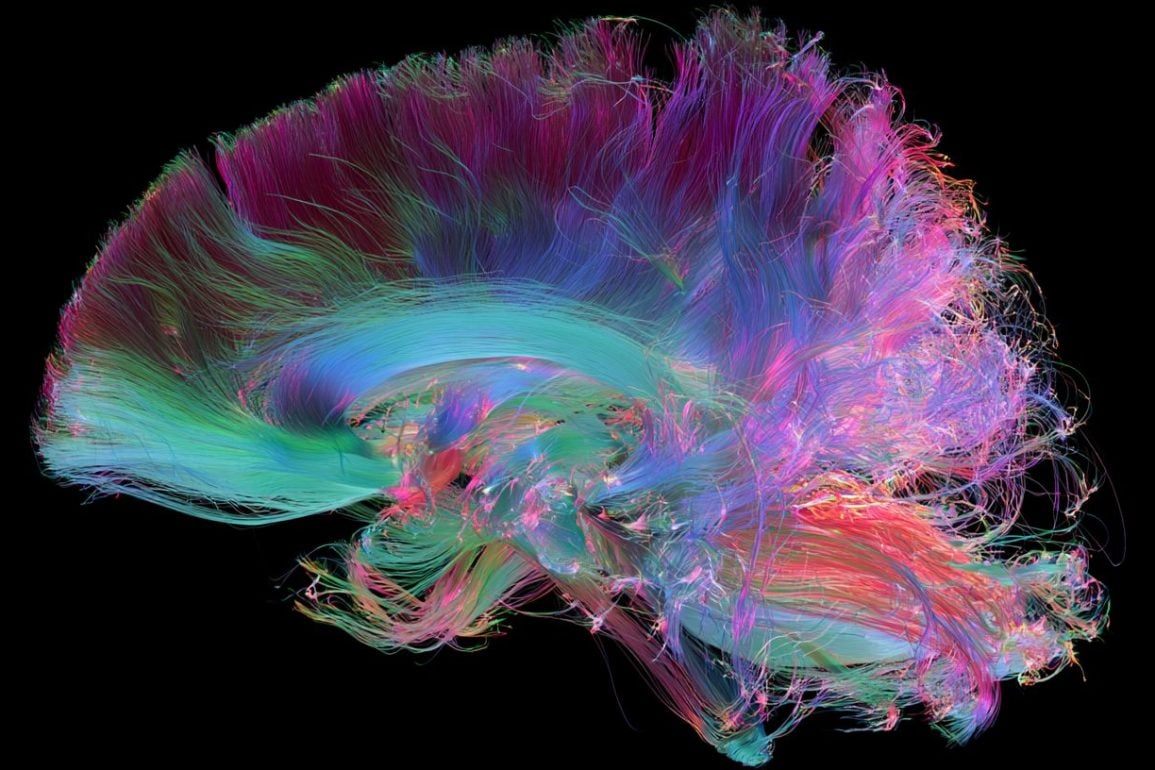 How can scientists determine cause and effect when experiments are impossible? A new framework published in The Innovation uses delay embedding entropy to infer intervention-level causality directly from observational da...
Overlooked Blood Cell May Tracks Parkinsons Brain Changes
Neuroscience News - 30 Oct 2026 17:07 Can blood platelets track Parkinsons disease progression? Research from the Germans Trias i Pujol Research Institute (IGTP) demonstrates that platelets reflect neurodegenerative shifts-from mitochondrial breakdown to dem...
Jupiter, Saturn, Uranus and Neptune could destroy each other sooner than we thought, simulations hint
Live Science - 30 Oct 2026 16:10 The outer solar system will descend into chaos just a few billion years after the sun exhausts its fuel - much sooner than scientists previously thought, a new study suggests.
'It isn't under control at all': Live Science readers respond to whether AI is making them lazy
Live Science - 30 Oct 2026 15:46 A new study revealed that people who rely on AI for basic tasks become less motivated over time. Live Science polled its readers on whether they have experienced this situation.
How a 'tropical' shortcut could help particle collider experiments
Phys.org - 30 Oct 2026 15:40 Particle accelerators are expensive. Not just to build or to run, but also to predict the outcome of measurements obtained from them.
UTe reveals two flavors of superconductivity under extreme pressure
Phys.org - 30 Oct 2026 15:00 Quantum researchers are searching for a topological superconductor-a material that, if discovered, would allow major advances in quantum computing by combining two distinct "flavors" of superconductivity.
Rusty crust made Mars warm and wet
New Scientist - 30 Oct 2026 15:00 It's unclear how and why Mars once became warm enough to allow water to flow on its surface, but a new idea suggests it comes down to rust below the surface
AI May Quickly Generate Ideas-but Teams of People Are Still More Creative
Singularity Hub - 30 Oct 2026 14:00 How is AI affecting collaboration and creativity? Cognitive scientists ran an experiment to find out. The post AI May Quickly Generate Ideas-but Teams of People Are Still More Creative appeared first on SingularityHub.
How did the biggest crypto heist in history just happen?
New Scientist - 30 Oct 2026 12:40 Billions of dollars' worth of cryptocurrency have been stolen in just a matter of minutes. Researchers are already unpicking what went wrong
Quantum skyrmions outlast entanglement, hinting at more resilient networks
Phys.org - 30 Oct 2026 11:40 Quantum networks could one day connect quantum computers into more powerful systems and enable new forms of secure communication. But a fundamental obstacle stands in the way: Quantum information is extraordinarily fragi...
Could AI ever build itself? Scientists map the road to the 'last AI built by humans.'
Live Science - 30 Oct 2026 10:00 Researchers hope recursive self-improvement could tackle the skyrocketing costs of developing advanced AI models. But is it viable?
Read an extract from Dark Eden by Chris Beckett
New Scientist - 30 Oct 2026 09:30 In this extract from Chris Becketts Dark Eden, the November read for the New Scientist Book Club, we meet some of the inhabitants of a dark planet that drifts outside the Milky Way, descendants of two astronauts marooned...
In Dark Eden, I imagined how life might exist on a sunless planet
New Scientist - 30 Oct 2026 09:30 Dark Eden, the November read for the New Scientist Book Club, takes place on a rogue planet outside the Milky Way. Award-winning author Chris Beckett explains how he thought through the science behind this night world
Reverse physics could help bridge the classical and quantum worlds
New Scientist - 30 Oct 2026 09:00 Physics is generally built on observations, then the maths that supports them comes later. Columnist Karmela Padavic-Callaghan takes a look at an effort to reverse this and rebuild the laws of physics from the maths up
Confirming altermagnetism: A geometric twist offers experimental proof
Phys.org - 30 Oct 2026 08:20 For decades, physicists recognized only two types of magnetism that occur in materials without external influence: ferromagnetism and antiferromagnetism. In findings published in Science, a team led by the U.S. Departmen...
Type 2 diabetes breakthrough as 54% achieve remission in just 6 months
Science Daily - 30 Oct 2026 08:12
A promising new study suggests that more than half of younger adults with type 2 diabetes could achieve remission in just six months through a combination of a low-calorie diet and structured exercise. Researchers found ...
Physicists created a tiny universe and watched time emerge without a clock
Science Daily - 30 Oct 2026 07:42
Scientists have created a miniature universe in the laboratory that could help answer one of the biggest mysteries in physics: What is time, and where does it come from? Using 24,000 ultracold atoms, a University of Birm...
Unusual quantum states in six-layer graphene offer clues to superconductivity
Phys.org - 30 Oct 2026 07:40 Graphene, a material consisting of a sheet of carbon atoms arranged in a honeycomb pattern, has proved promising for various technological applications. Materials in which several layers of graphene are stacked together ...
The asteroid killed the dinosaurs. Why did crocodiles survive?
Science Daily - 30 Oct 2026 07:34
Scientists may have solved a 66-million-year-old mystery: how crocodiles survived the asteroid that wiped out the dinosaurs. A sweeping analysis of fossils and ancient climates suggests that their preference for warm env...
A computer scientist breaks through a limit that stood since 1996
Science Daily - 30 Oct 2026 07:08
A computer scientist has achieved a breakthrough in a nearly 25-year-old problem involving how computers calculate distances across enormous networks. The new algorithm delivers more reliable estimates for closely connec...
 Global
 Great Britain
 Indian
 South Africa