Science News
 American
Science News for 20 November 2026
NASAs Voyager 1 is now so far away that light takes 24 hours to reach it
Science Daily - 20 Nov 2026 21:24
NASAs Voyager 1 has reached an extraordinary milestone, traveling 16.1 billion miles from Earth to become the first spacecraft so distant that its signals take a full day to reach us. Nearly 50 years after launch, the ag...
James Webb telescope spots giant star swallowing its companion in first-ever observations of a stellar merger
Live Science - 20 Nov 2026 17:12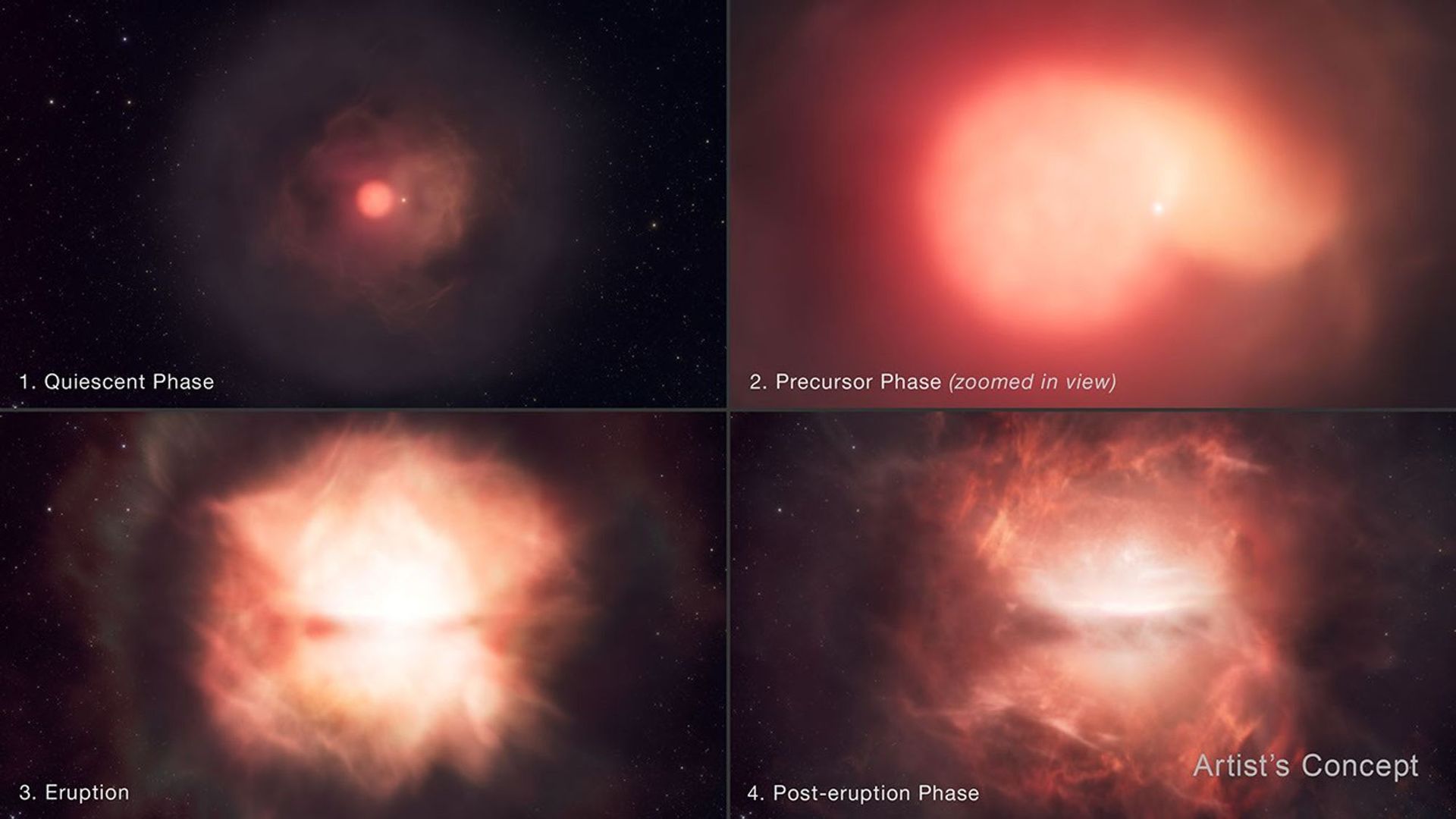 Astronomers using the James Webb Space Telescope followed up on years-old observations to confirm the first recorded act of a giant star swallowing its companion. The stellar cannibalism occurred just next door, in the A...
US, Russia and China look set to block ban on autonomous weapons
New Scientist - 20 Nov 2026 14:38 More than 70 countries are ready to begin negotiations on prohibiting lethal autonomous weapons, but large militarised nations are expected to obstruct efforts to agree a ban
Mathematicians are amazed by holy grail proof of Riemann hypothesis
New Scientist - 20 Nov 2026 22:33 As news spread that an Anthropic researcher used AI to find an answer to one of the longest-standing questions in their field, mathematicians expressed awe, uncertainty and at least one claim of having a competing proof ...
Quantum software matches classical benchmark for a molecular interaction
Phys.org - 20 Nov 2026 22:00 Predicting how molecules interact is central to drug discovery: it offers important information about how a new drug might work in the human body, the side effects it can cause and more. Computationally modeling these in...
Quantum effect could reverse gravity and violate Einsteins theory of relativity
New Scientist - 20 Nov 2026 22:00 Two mathematical investigations devised a way to possibly make gravity produce repulsion between objects, breaking away from a long-standing understanding of this force
Brains of people with PTSD have unique epigenetic marks, study finds
Live Science - 20 Nov 2026 21:50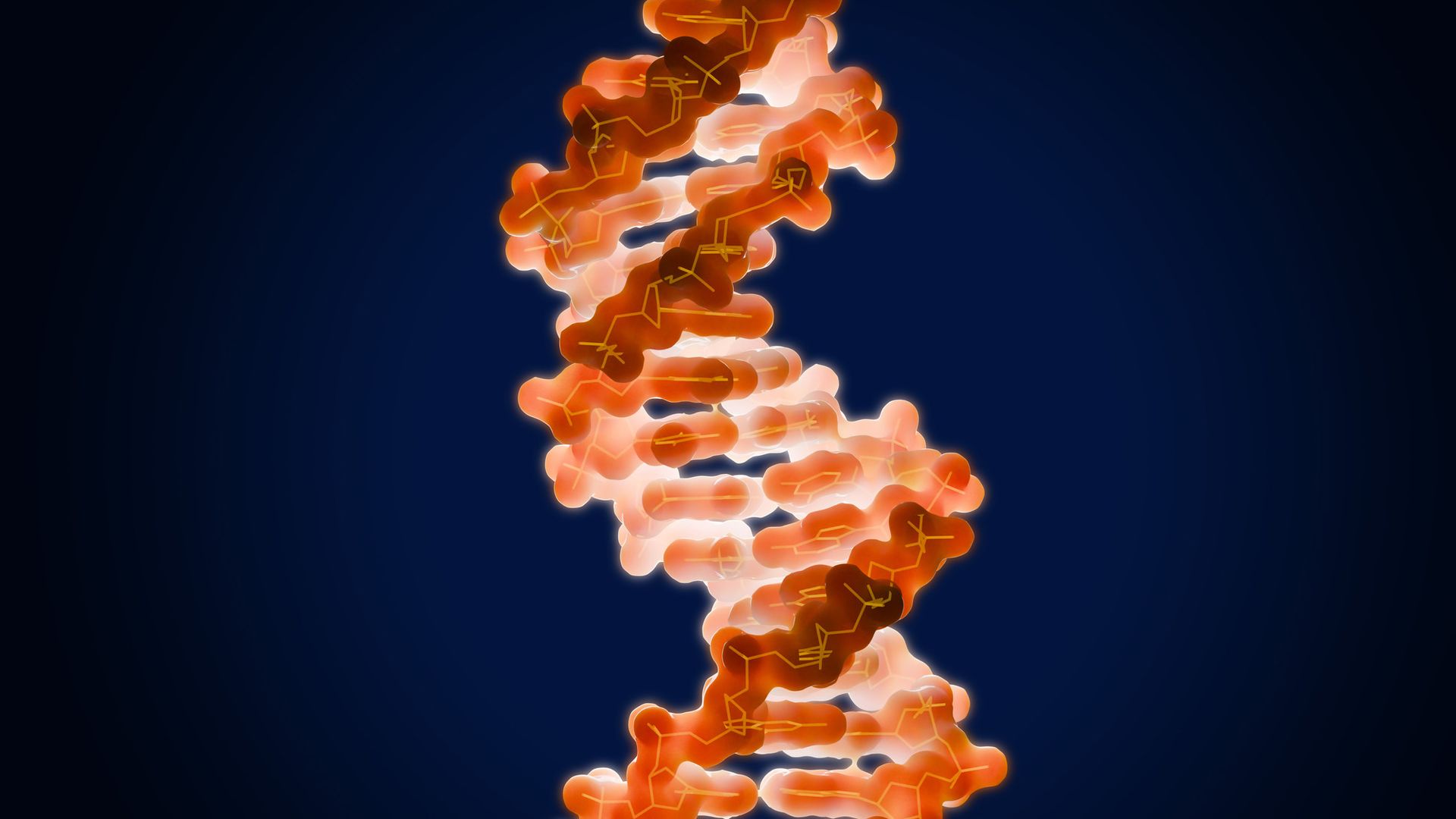 The brains of people with PTSD bear molecular changes that differ from those in people with other conditions, like depression, a new study finds.
Microplastics may be more dangerous than we thought. Scientists just discovered why
Science Daily - 20 Nov 2026 21:35
Microplastics may be doing something far more dangerous than simply accumulating in our bodies. Scientists have discovered that tiny plastic particles can interact with water to generate highly reactive molecules capable...
What is the Riemann hypothesis and why is its solution so monumental?
New Scientist - 20 Nov 2026 21:24 It has been called the hardest problem in mathematics, and now through a combination of human ingenuity and relentlessness, and the computational power of AI, the Riemann hypothesis may have finally been solved
Waterfall of fog spills over Mallorca cliffs in stunning winning image for Weather Photographer of the Year 2026
Live Science - 20 Nov 2026 20:32 A spectacular sea of fog, a perfectly formed rainbow and dramatic lightning strikes feature among this year's winning photographs for Weather Photographer of the Year 2026.
A decades-old mystery about light could hold the key to faster internet
Science Daily - 20 Nov 2026 19:02
A promising material for ultra-fast optical communications has held a secret for decades, but scientists may have finally cracked it. Researchers at KAIST and Caltech have precisely measured how barium titanate controls ...
US bill aiming to boost clean energy could backfire
New Scientist - 20 Nov 2026 16:56 The Bipartisan American Affordability and Jobs Act is a gamble that speeding up permits for energy projects would help renewables more than fossil fuels - but many environmentalists have doubts
An Anthropic mathematician claims to have proven the Riemann hypothesis. We have to rethink how we reward expertise.
Live Science - 20 Nov 2026 16:52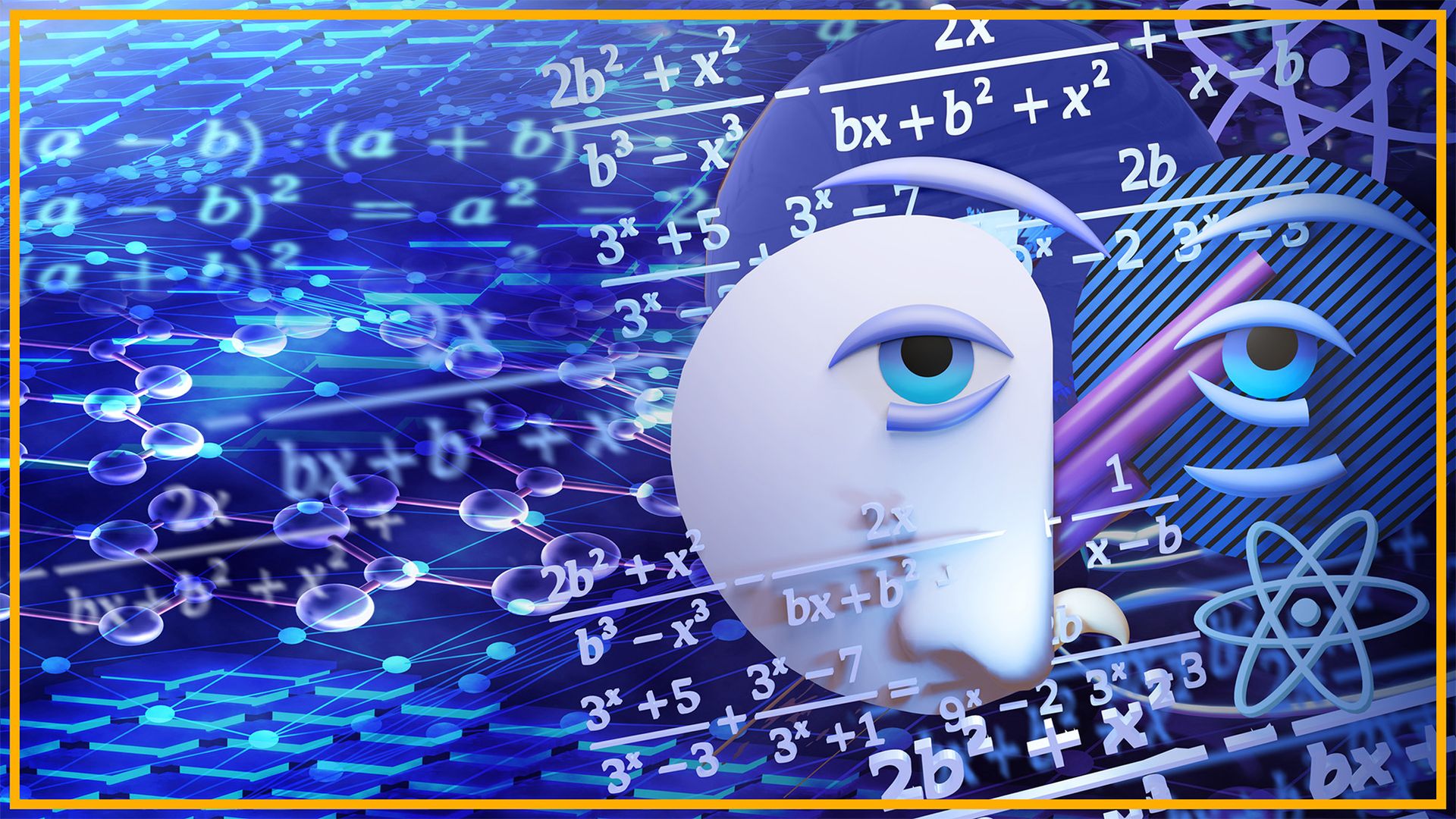 AI has upended the math community with a flood of results. We have to rethink how we assess which questions and answers matter - putting humans back at the center.
Anthropic mathematician claims AI-assisted proof of the Riemann hypothesis
New Scientist - 20 Nov 2026 15:20 The Riemann hypothesis is one of the most difficult problems in mathematics, having stood for 167 years. It may have just been settled with the help of AI
Catching AIs Mistakes Is a Mental Burden-and a Drag on Productivity
Singularity Hub - 20 Nov 2026 15:00 AI gains are often countered by the time and energy spent checking its work. The post Catching AIs Mistakes Is a Mental Burden-and a Drag on Productivity appeared first on SingularityHub.
X-ray technique advances temperature measurements under extreme pressure
Phys.org - 20 Nov 2026 14:20 Scientists at Lawrence Livermore National Laboratory (LLNL) have advanced the ability to measure temperatures in materials subjected to extreme pressures at the National Ignition Facility (NIF), providing new insights in...
Theory explains how fusion plasmas enter a state of improved energy confinement, solving a 40-year puzzle
Phys.org - 20 Nov 2026 12:20 Nuclear fusion promises a source of energy by combining light atomic nuclei, the same process that powers the sun. To achieve fusion on Earth, scientists must heat a gas to extreme temperatures, creating a charged state ...
Ghostly 'sand body' double burial unearthed at Sutton Hoo
Live Science - 20 Nov 2026 12:00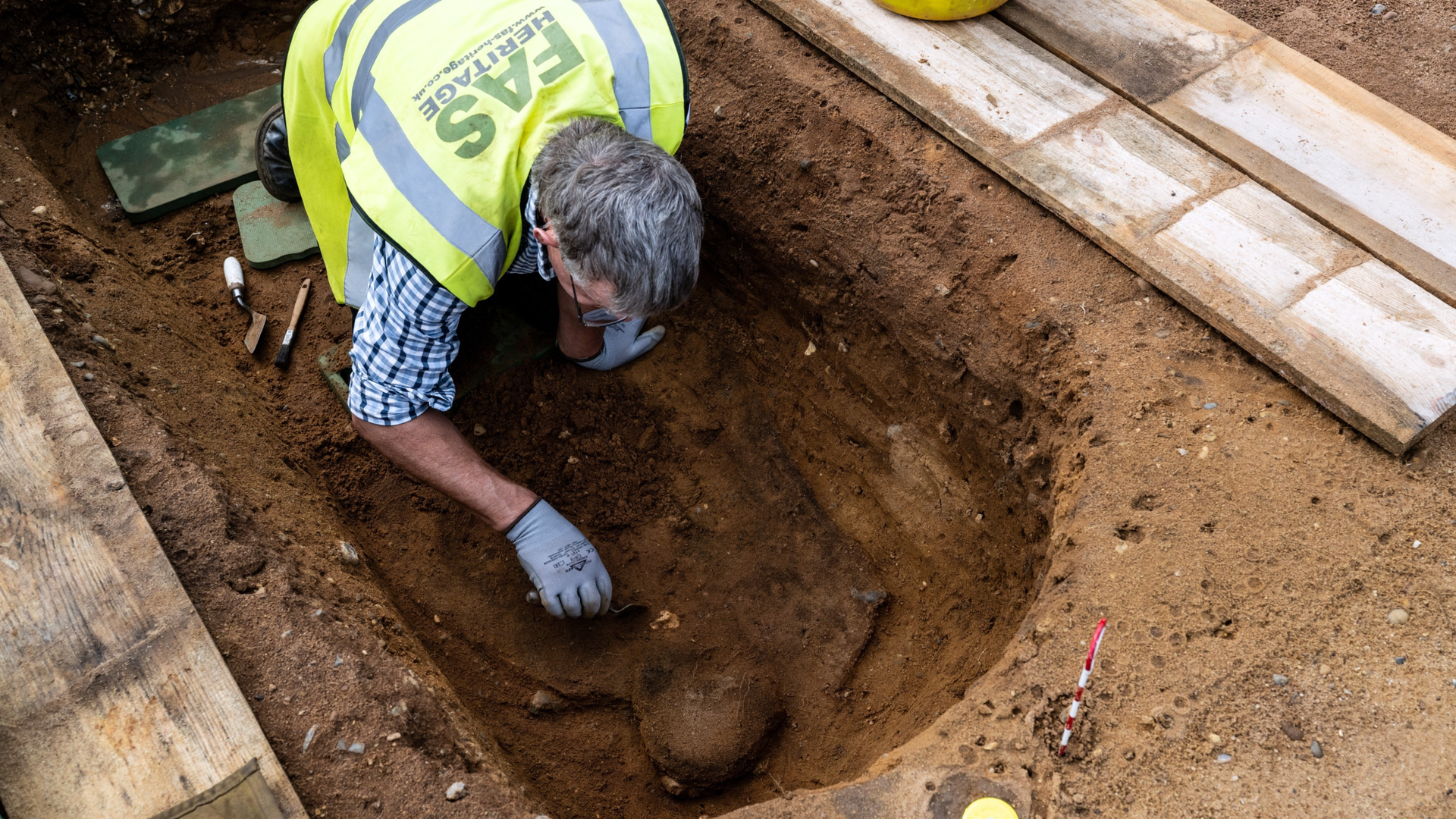 During a month-long excavation with the documentary series "Time Team," archaeologists unearthed another mysterious "sand body" at Sutton Hoo.
Unexpected stone tools from Israel raise questions about cultural evolution
New Scientist - 20 Nov 2026 12:00 Ancient humans in south-west Asia first began producing advanced stone blades 100,000 years before the tools became widely used, indicating that new technologies weren't automatically adopted by communities
Excitons mimic light in atom-thin material, confirming decade-old quantum prediction
Phys.org - 20 Nov 2026 11:40 Combining their skills in theory and experiment, Yale researchers have observed for the first time a type of energy-carrying composite particle move in a highly unexpected way. It's a finding that could lead to advan...
Quantum entanglement could thwart hackers and scammers, physicists reveal
Live Science - 20 Nov 2026 11:00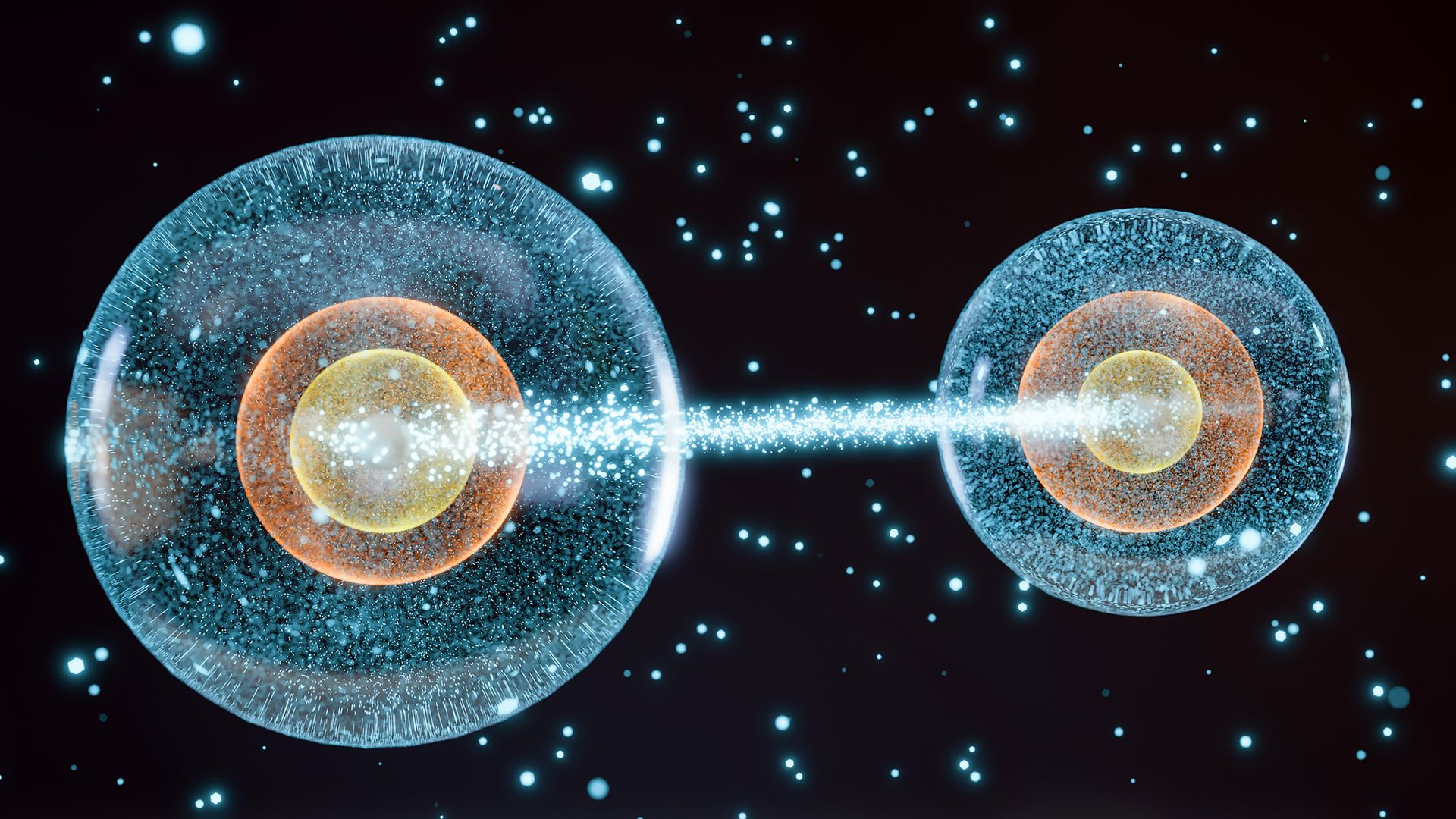 In a first-of-its-kind experiment, physicists used pairs of entangled photons to verify a person's location. That's a step toward anchoring digital security to the physical world.
Dark Eden author Chris Beckett on how sci-fi needs surface plausibility
New Scientist - 20 Nov 2026 10:00 Chris Beckett, author of Dark Eden, November's read for the New Scientist Book Club, talks to Alison Flood about how he wrote his Arthur C Clarke award-winning novel
 Global
 Great Britain
 Indian
 South Africa